Dispatcher-to-Driver Communication: A Practical Operating System
Dispatcher-to-driver communication works best when it is predictable. The driver should know what information will be sent, which channel is used, when updates are expected, and who owns the next action when something changes. The goal is not constant messaging; it is accurate operational communication.

Agree on the communication system first
Before the first load, define:
- primary call / message channel;
- backup channel;
- coverage hours;
- emergency or safety contact;
- how availability is reported;
- how appointment changes are confirmed;
- where shipment documents are sent;
- who can approve commercial changes.
The dispatcher should not build a private communication process that conflicts with the carrier's procedures.
Start with a clean truck-availability update
A useful availability record can include:
- current location;
- empty / loaded status;
- estimated empty time;
- trailer type;
- driver-reported HOS or operating constraint;
- preferred direction;
- carrier instructions.
The dispatcher uses that information to search. If something is unclear, ask before recommending a load.
Send a concise trip brief after booking
A driver dispatch message should contain verified information, not the dispatcher's entire call history.
Example structure:
Load reference: TT-204
Pickup: [address / date / time / timezone]
Pickup reference: [confirmed reference]
Commodity / weight: [as provided]
Delivery: [address / date / time / timezone]
Special instructions: [verified written instruction]
Next update: [agreed checkpoint]
The carrier can add fields required by its operation.
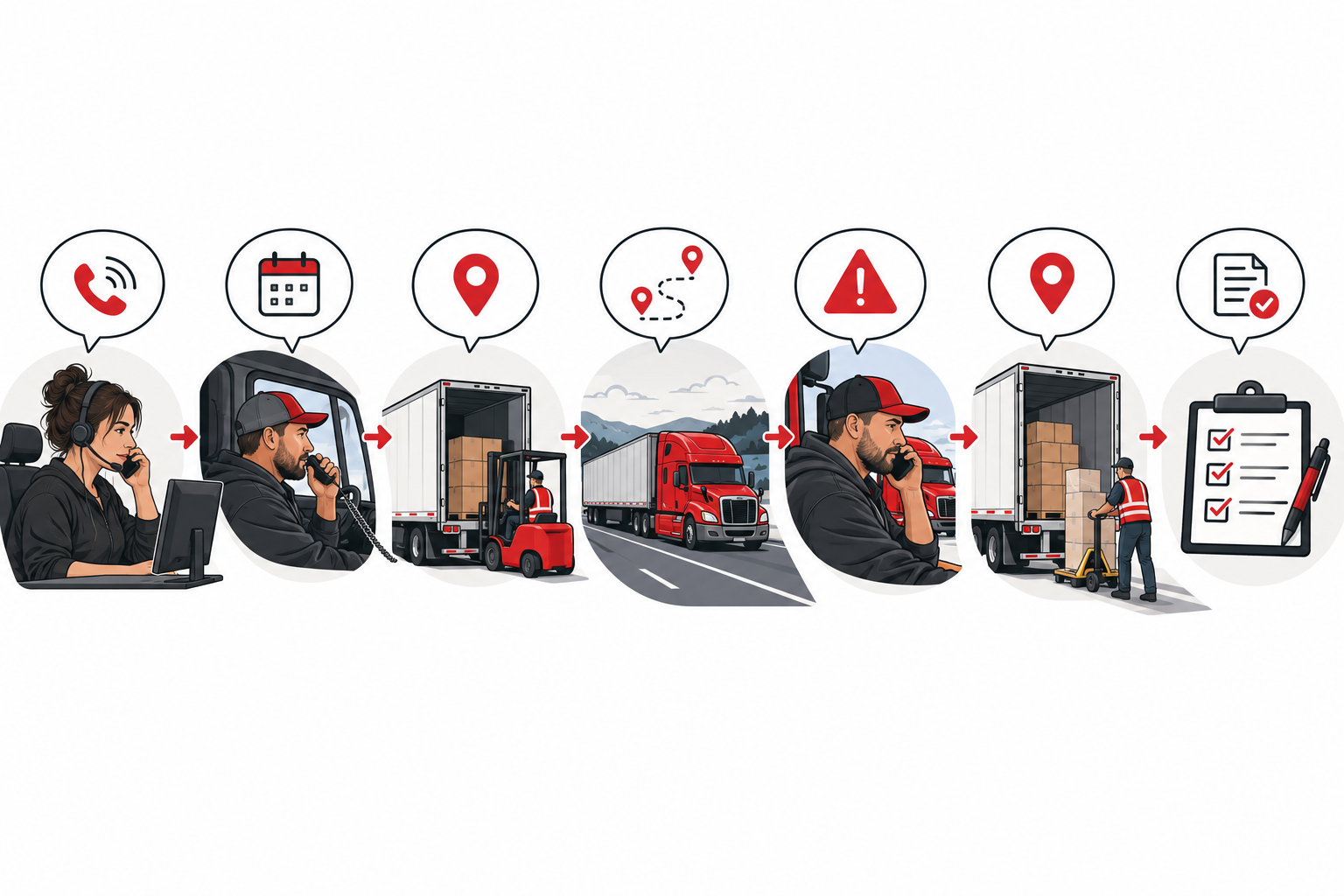
Do not turn communication into pressure
FMCSA HOS rules limit driving and duty time for covered drivers. A dispatcher should not pressure a driver to meet a schedule that the driver reports is not workable.
When timing changes:
- get the driver's current status;
- identify the affected appointment;
- escalate through the carrier process;
- notify the appropriate party with verified facts;
- document the update.
Do not invent remaining hours from a distance estimate.
Handle disagreement professionally
A driver may reject a load the dispatcher considers attractive.
Instead of arguing, clarify the reason:
- equipment concern;
- schedule;
- destination;
- personal or carrier-approved preference;
- HOS;
- facility issue;
- safety concern.
Some issues belong to carrier management rather than negotiation between dispatcher and driver.
A dispatcher should know the approval boundary.
Use written confirmation after important calls
If a call changes the trip, follow with a short written summary.
Example:
Confirming our call: delivery appointment changed to 10:00 Eastern. Carrier operations has been notified. Please update us after check-in.
This creates a shared record and reduces memory disputes.
Build standard updates
Pickup check-in
Checked in at pickup at [time]. Loading status: [verified status]. Next update: [time/event].
Delay
Loading is delayed. Driver checked in at [time]. Current impact: [known impact]. [Owner] is contacting [party]. Next update: [time].
Transit
In transit. Current reported status: [status]. Delivery appointment remains [time] / requires review.
Delivery
Checked in for delivery at [time]. Awaiting unload / completed at [time]. POD status: [received / pending].
These are structures, not mandatory scripts.
Keep commercial negotiation separate from safety
The dispatcher may discuss rates with brokers and may discuss carrier preferences with drivers. Safety decisions should not become bargaining chips.
If the driver reports a safety, fatigue, equipment, or legal availability concern, follow the carrier's safety process.
Handoffs need driver context
When a shift changes, the next dispatcher should know:
- last driver update;
- next expected update;
- any unresolved issue;
- appointment at risk;
- document status;
- who is already communicating with the broker or facility.
Do not make the driver repeat the entire story because the internal handoff failed.
Review communication quality
Once a week, sample several shipment threads. Check whether updates contained the load reference, verified status, next action, and next update time. Look for duplicated questions, vague ETAs, or important changes that existed only in a phone call.
This review can improve templates without turning communication into excessive reporting.
Frequently asked questions
How often should a dispatcher contact the driver?
There is no universal interval. Use carrier instructions, shipment needs, and agreed checkpoints rather than unnecessary constant calls.
Should drivers negotiate loads with dispatchers?
The carrier decides its internal approval process. Clarify who has final authority before booking.
Is text better than phone calls?
Each has a role. Calls can resolve complex issues quickly; written summaries create a record. Use both appropriately.
Build the communication habit before volume
Use the daily workflow, HOS guide, and shift handoff checklist to create one consistent dispatcher-driver communication system.
Sources and further reference
- O*NET — Dispatchers, Except Police, Fire, and Ambulance (43-5032.00)
- FMCSA — Summary of Hours of Service Regulations
Worked scenarios, comparisons, and checklists in this article are educational examples or editorial recommendations. They are not promises of employment, rates, revenue, or profit.
