Truck Dispatcher Shift Handoff Checklist: What the Next Dispatcher Needs
A dispatcher shift handoff should let the next person continue the operation without reconstructing the entire day from chats, emails, and memory. The handoff should identify every active truck, the current load status, appointments, unresolved exceptions, document status, approvals, and the next required action.

Use one standardized handoff record
A handoff fails when every dispatcher writes notes differently.
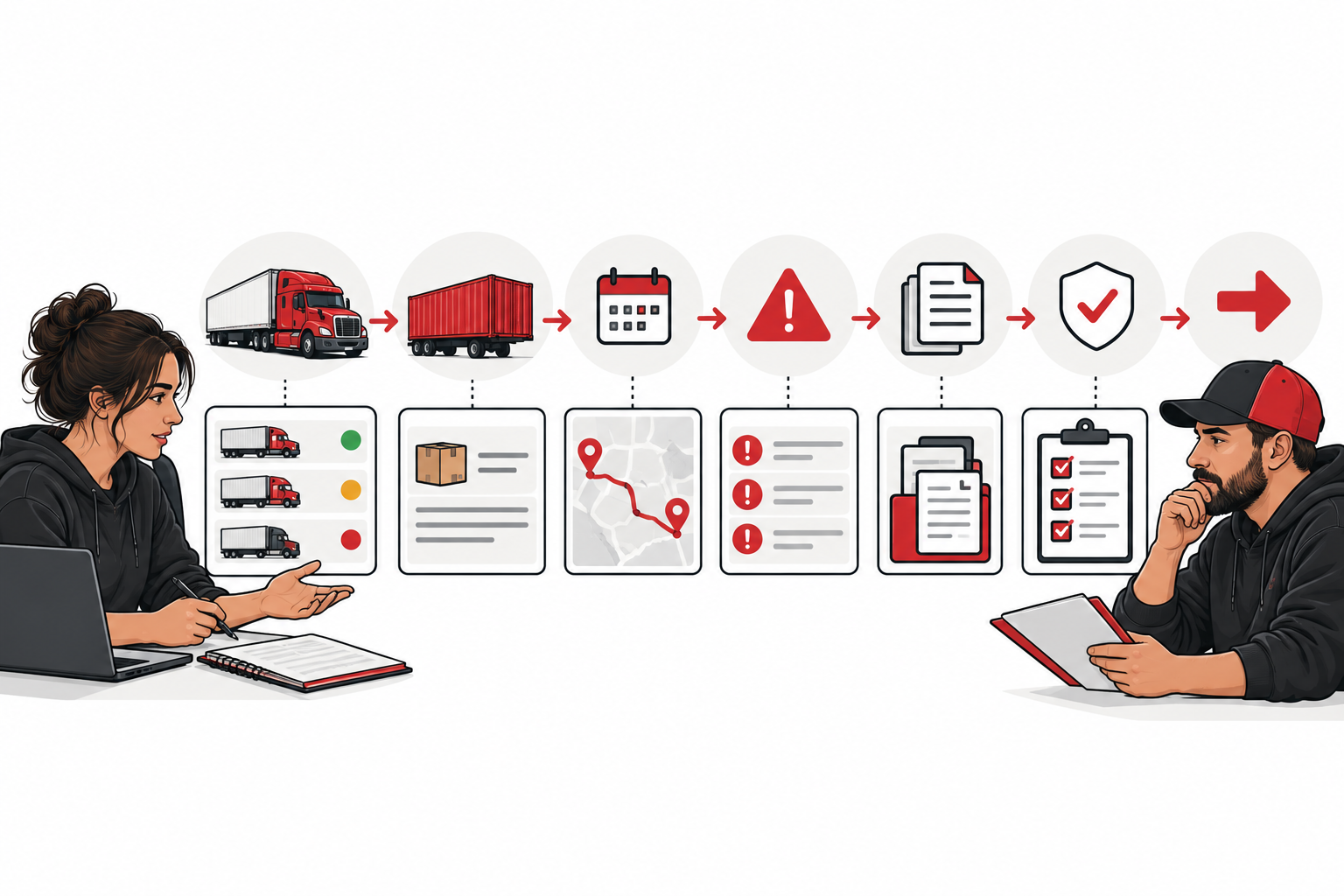
Use the same fields for every active truck:
- carrier / truck identifier;
- driver;
- current location or shipment status;
- current load;
- next appointment;
- last verified update;
- open issue;
- owner of the issue;
- next action;
- next update time;
- document status;
- special carrier instruction.
The record should be understandable without asking the outgoing dispatcher for a verbal translation.
Separate facts from assumptions
Write:
Driver checked in at receiver at 14:20 Central. Waiting for door. Broker notified.
Do not write:
Should be done soon.
The first statement can be handed off. The second is an opinion.
Flag time-critical items
A dispatcher coming onto the shift needs to see risk quickly.
Useful priority labels can be:
Red: immediate issue affecting safety, fraud, pickup, delivery, or authorization.
Amber: unresolved issue likely to affect the next appointment.
Green: normal active shipment with a scheduled next checkpoint.
The labels are internal workflow aids, not replacements for the underlying notes.
Include approvals and commercial commitments
If a broker offered extra compensation, the next dispatcher should know whether it was only discussed or actually confirmed.
Record:
- what changed;
- who approved it;
- whether the RC was revised;
- whether the carrier accepted;
- what remains outstanding.
Do not hand off a verbal rate change as if it were final written terms.
Include document status
For every active or recently delivered load, show whether the team has:
- current RC;
- pickup document / BOL;
- delay evidence;
- delivery document / POD;
- any revised appointment;
- any unresolved document request.
The next dispatcher should not discover missing paperwork after the opportunity to collect it has passed.
Example fictional handoff
| Field | TT-204 |
|---|---|
| Status | Loaded, in transit |
| Next appointment | Delivery 08:00 Eastern |
| Last update | Driver reported normal transit at 20:10 Central |
| Open issue | None |
| Next action | Confirm ETA at agreed morning checkpoint |
| RC | Current version stored |
| BOL | Received |
| POD | Pending delivery |
| Broker communication | No open request |
A delayed load would contain more detail and an assigned owner.
The outgoing dispatcher should still communicate
A written handoff does not mean silently logging off.
For high-risk items, briefly review the record with the incoming dispatcher and confirm they understand ownership.
A useful closing question is:
Which active item would create the biggest problem if nobody touched it for the next hour?
If the answer is unclear, the handoff is not complete.
Remote teams need stronger handoffs
A co-located team may notice each other's calls and screens. Remote dispatchers do not have that passive context.
Therefore a remote operation benefits from:
- one shared status source;
- consistent update times;
- explicit owner fields;
- linked documents;
- backup contacts;
- visible coverage hours.
Do not depend on private personal messages for operational continuity.
Audit the handoff after the shift
A handoff process improves when the team reviews failures. If the incoming dispatcher had to call the driver for information already available to the outgoing dispatcher, identify which field was missing. If a broker request was duplicated, check whether ownership was unclear. If a document was lost, review the storage link.
A short weekly audit can track:
- number of loads handed off;
- handoffs with missing next-action owner;
- repeated calls caused by missing context;
- late updates after shift change;
- document issues discovered after handoff.
The metrics are not for blaming individuals. They show where the handoff template or workflow needs to change.
Frequently asked questions
How long should a handoff take?
It depends on active workload. The goal is not a specific number of minutes; it is complete transfer of ownership.
Should completed loads stay on the board?
Keep them long enough to confirm closeout and document completeness, then move them into the carrier's normal archive.
Is a verbal handoff enough?
For material operating information, a written shared record is much safer. Verbal discussion can supplement it.
Make handoff quality measurable
Review recurring errors: missed appointments, repeated calls to drivers, forgotten broker requests, missing PODs, or duplicated work. Each one can reveal a field that the handoff system needs.
Pair this checklist with the daily workflow and multiple-truck dispatch guide.
Sources and further reference
Worked scenarios, comparisons, and checklists in this article are educational examples or editorial recommendations. They are not promises of employment, rates, revenue, or profit.
