Dry Van, Reefer, or Flatbed: Check the Equipment Before the Rate
Dry vans, refrigerated trailers, and flatbeds support different cargo and operating requirements. A dispatcher should match the shipment to the actual truck and trailer, not assume that a broad equipment label answers every compatibility question. Confirm the details before negotiating or recommending the load.
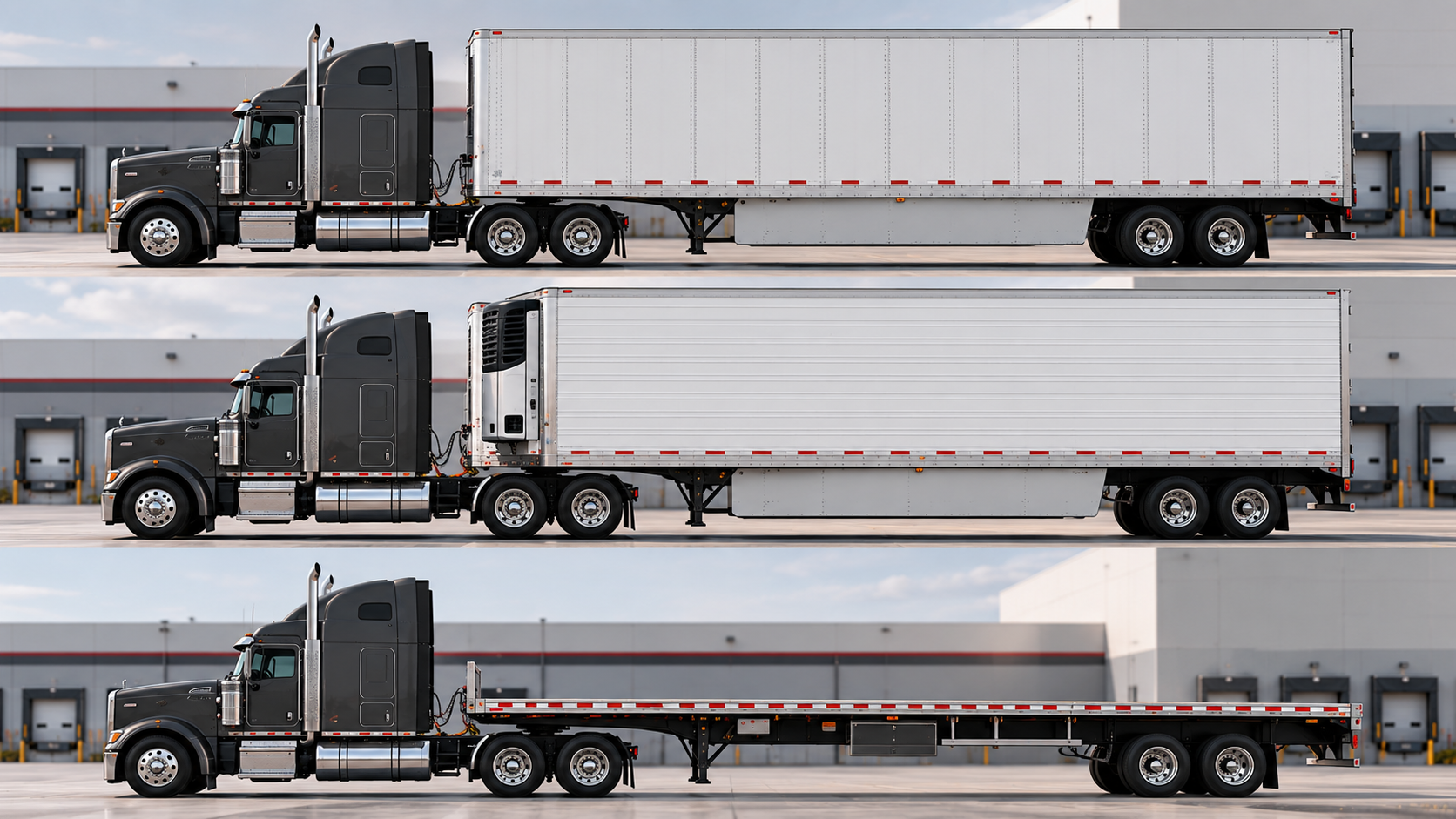
Use equipment categories as a starting point
A dry van is an enclosed trailer commonly used for freight that does not require active temperature control. A reefer is a refrigerated trailer capable of controlled-temperature operation. A flatbed uses an open deck and introduces different loading and securement considerations.
These descriptions are orientation, not a specification sheet. Actual dimensions, capacity, condition, accessories, and operating restrictions vary. For a live shipment, the carrier must confirm what the assigned equipment can safely and legally handle.
| Equipment | Questions to resolve before booking |
|---|---|
| Dry van | Does the cargo fit the actual interior and door opening? How will it be loaded and secured? |
| Reefer | What written temperature, operating-mode, cleanliness, and monitoring instructions apply? |
| Flatbed | What are the cargo dimensions, loading method, securement needs, and route constraints? |
Do not promise that a trailer can handle a shipment solely because both the posting and carrier profile use the same equipment abbreviation.
Build a more detailed dry-van profile
Record the actual trailer dimensions, door configuration, relevant accessories, and restrictions supplied by the carrier. Clarify whether the pickup and delivery sites can accommodate the equipment and how loading and unloading will occur.
Ask about the commodity and packaging rather than accepting “general freight” when the details matter. A cargo description can reveal questions about contamination, loading requirements, value, or insurance that the equipment label does not answer.
If the information changes after booking, return to the carrier for review. Do not tell the driver that a different shipment is “close enough” without appropriate confirmation.
Treat reefer instructions as operational requirements
For temperature-sensitive freight, obtain clear written instructions from the authorized party and have the carrier confirm that the equipment and process can meet them. Record the required setpoint, operating mode, preconditioning or cleanliness requirements where applicable, and the escalation path for discrepancies.
The FDA's sanitary-transportation rule addresses relevant responsibilities for covered food transportation. Applicability and duties depend on the operation and assigned responsibilities. This article does not replace the carrier's food-safety procedures or qualified review.
Never invent a temperature setting based on a generic commodity name. If loading paperwork conflicts with prior instructions, pause and obtain authorized clarification. Preserve the instruction history rather than overwriting the earlier version.
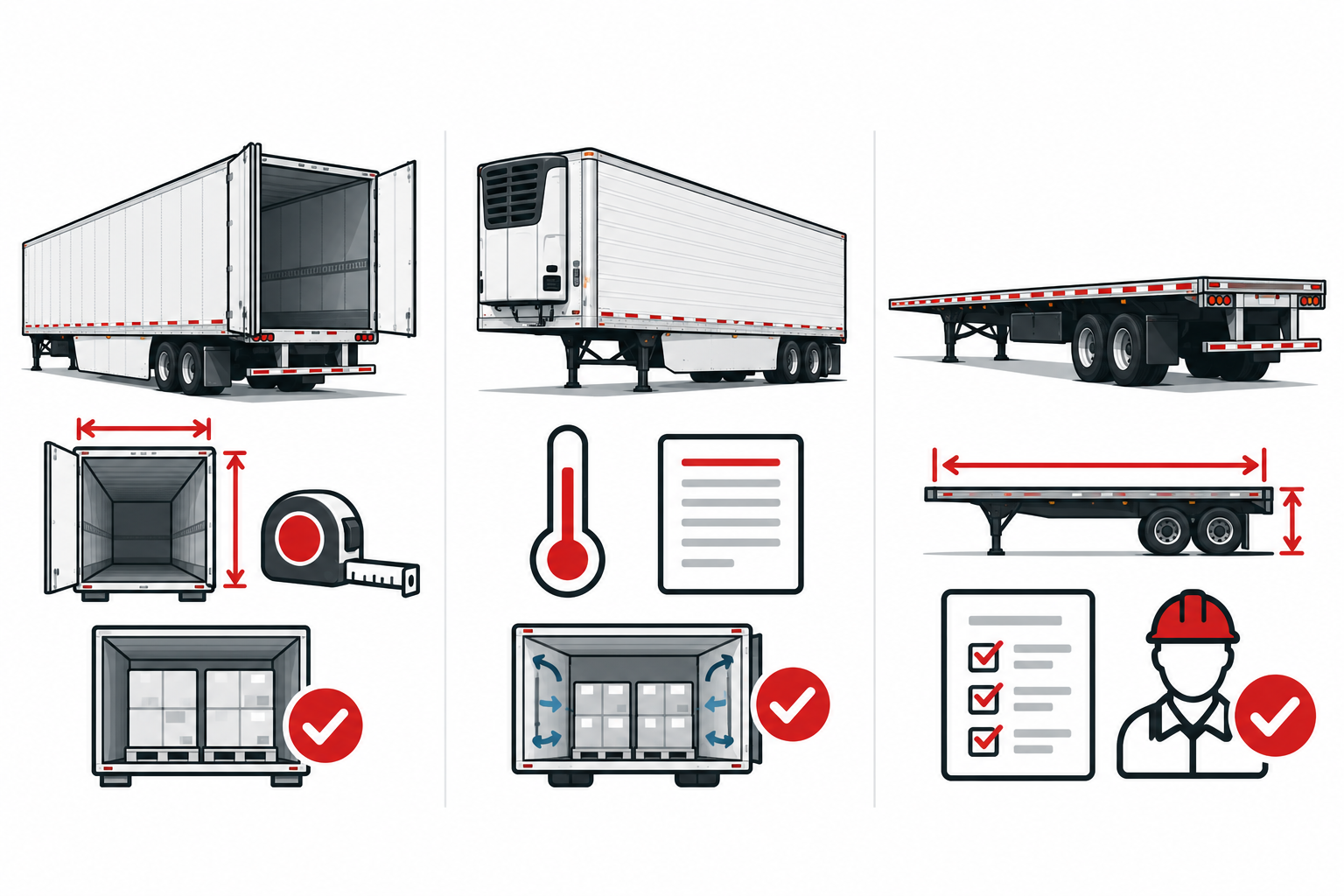
Treat flatbed planning as more than a dimension check
Ask the carrier to confirm cargo dimensions and weight, deck fit, loading and unloading arrangements, required accessories, and whether special routing or permits need evaluation. Do not assume a dispatcher can approve securement or legal dimensions from a short posting.
FMCSA's cargo-securement resources describe the regulatory framework. The driver, carrier, and other qualified parties must address the actual securement plan and relevant commodity requirements. A blog illustration is not a rigging instruction.
If the load requires skills or equipment outside the carrier's confirmed capability, reject it or obtain qualified review. A higher rate is not a reason to learn an unfamiliar safety-critical requirement during loading.
Choose a learning focus before expanding services
For a beginner, the useful question is not “Which equipment pays the most?” It is “Which equipment can I learn to evaluate accurately, with appropriate supervision and feedback?”
Build a training profile for one equipment category and identify the questions you still cannot answer. Then practice recognizing when a decision belongs to the carrier or another specialist. Knowing the limit of your knowledge is part of operational competence.
Do not describe yourself as a specialist because you have watched one demonstration. Add equipment scope only after the workflow, access, and escalation arrangements support it.
Keep equipment information current
A carrier may substitute a trailer, change an accessory, or temporarily restrict a unit. Reconfirm the actual assignment before booking. A stored fleet profile is useful, but it is not a live guarantee about every truck.
Record who confirmed the specification and when. This makes a later discrepancy easier to investigate and helps prevent one incorrect assumption from spreading across multiple loads.
Frequently asked questions
Is a 53-foot trailer enough information to book a load?
No. Length alone does not establish interior clearance, usable capacity, loading method, cargo suitability, or legal operation on the route.
Is reefer dispatching simply dry-van dispatching with a temperature field?
No. The operational instructions, monitoring, equipment readiness, and escalation needs can differ materially. Learn the actual workflow before accepting the assignment.
Which equipment type should a beginner choose?
Choose a scope you can study and practice with suitable guidance. Do not select an unfamiliar specialty solely because an advertisement claims higher rates.
Build the truck profile before searching
Use the carrier-onboarding guide and load-search process to make equipment checks repeatable. Explore Trucking Territory's course to develop the underlying dispatch workflow.
Sources and further reference
Worked scenarios and checklists in this article are educational examples or editorial recommendations, not promised business results.
