DAT vs. Truckstop for Dispatchers: A Practical Comparison
The better choice between DAT and Truckstop depends on the carrier, equipment, operating areas, required features, and authorized account arrangement. There is no defensible universal winner without testing those conditions. Compare the number of suitable opportunities and the quality of your decisions, not just a provider's total listing count.

What can be verified from the providers?
DAT's load-board page and Truckstop's load-board page describe freight-search products and supporting features. Truckstop's published carrier-plan comparison separates features such as rate insights and advanced comparison tools by plan. DAT's dispatcher startup guide describes access through a carrier's account using a purchased dispatcher seat.
Confirm current packages, eligibility, user permissions, and fees directly. This guide intentionally avoids fixed price comparisons because plan structures and offers can change. Product descriptions are supplier claims, not independent evidence that a platform will improve your profit.
Build one test profile for both platforms
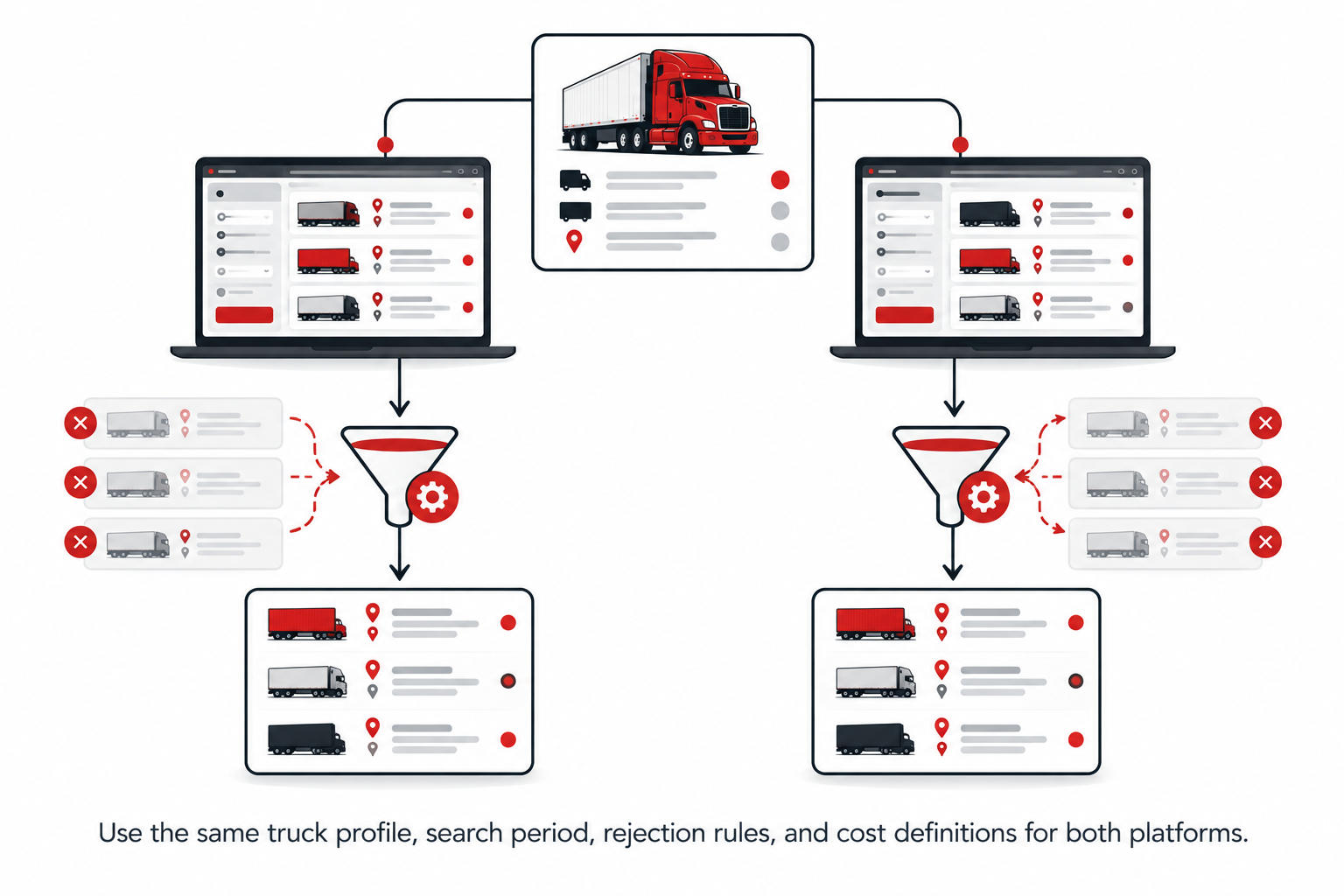
Use the same fictional or authorized carrier profile in both evaluations. Fix the equipment type, available location, pickup date, search radius, and destination preferences. Record any carrier-eligibility restrictions that affect what can be booked.
Test during comparable periods. A search performed on one platform in the morning and another much later may reflect a changed market rather than a product difference. Repeat the evaluation instead of treating a single screen as conclusive.
Before using live data, confirm that your access and testing activities comply with the providers' terms. Do not create false carrier credentials for a comparison.
Count suitable loads, not raw listings
Create a rejection log. Remove duplicate opportunities, unavailable postings, unsuitable equipment, impossible appointments, unacceptable destinations, and counterparties that do not meet the carrier's review requirements.
The remaining count is more useful than the initial result count, but it still does not prove that loads can be booked at an attractive rate. Track which postings led to a relevant conversation and which were actually workable after details were confirmed.
| Evaluation area | What to record |
|---|---|
| Search relevance | Suitable opportunities after consistent filtering |
| Listing quality | Missing details, duplicates, and stale opportunities |
| Timing | Time required to identify a workable shortlist |
| Supporting information | Available context for rates and counterparty review |
| Workflow | Saved searches, records, alerts, and handoff usability |
| Commercial fit | Total cost and permitted users for the needed plan |
These are proposed evaluation categories, not results of an independent live platform test.
Examine rate information carefully
Ask what a displayed rate represents. Is it a posted ask, historical transaction measure, estimate, or another type of information? Check the equipment, period, geography, mileage basis, and fuel treatment before comparing it with a proposed shipment.
Two numbers labeled “rate per mile” can be based on different inputs. Use a consistent all-mile calculation for your own shipment decision rather than treating a screen value as a guaranteed achievable rate.
Test verification and communication features
Review how the platform presents company identity, payment-related information, and contact details. Ask which data is supplied by the user, which comes from external records, and how recent it is. No interface should replace independent review when information conflicts.
Test the actual contact workflow. Can you find the details you need quickly? Can you preserve the current terms outside a disappearing conversation? Can another authorized dispatcher continue the assignment? Those operational questions may matter more than an attractive dashboard.
Compare the full commercial arrangement
Record the required plan, seats, optional tools, taxes or additional charges where applicable, term length, and cancellation conditions. Ask which features are available in your account type rather than assuming that every feature shown in a sales presentation is included.
Then estimate the incremental value of a second subscription. If it produces no additional suitable opportunities or useful information during your test, the extra cost needs a different justification. If it reveals a genuine gap, record the evidence rather than simply declaring that two platforms must be better than one.
Frequently asked questions
Which platform has more loads?
Provider totals may use different counting methods and do not establish how many suitable loads exist for your truck. Evaluate a consistent carrier-specific sample.
Which is best for a new dispatcher?
Choose authorized access, a manageable workflow, and coverage relevant to the carrier you support. A beginner learning through simulations may not need an immediate subscription.
Is this a sponsored ranking?
No paid ranking is presented here. This is a decision framework based on public product information, not a claim that we independently tested every plan or measured comparative performance.
Test the process before committing
Follow the load-search workflow during a product demo or permitted trial. For the underlying dispatch decisions, explore Trucking Territory's training.
Sources and further reference
- DAT — Load Boards, current product information
- Truckstop — Load Board, current product information
- DAT — Start Up Guide: How to Become a Truck Dispatcher
Worked scenarios and checklists in this article are educational examples or editorial recommendations, not promised business results.
