How to Find Carrier Clients for a Dispatch Service
To find carrier clients for a dispatch service, choose a carrier profile you can genuinely support, explain a specific operational benefit, and run a consistent discovery process. The goal is not to collect as many phone numbers as possible. It is to find a small number of carriers whose needs match your competence and capacity.

Define the carrier you can help
Start with equipment, coverage hours, operating preferences, communication needs, and the size of the assignment you can manage. A broad offer such as “dispatching for all trucks everywhere” makes it difficult to explain why your service fits a particular carrier.
Build a simple fit statement: “We support a defined equipment type during agreed hours, with a documented load-approval process and organized trip updates.” Replace the generic parts with facts you can support. Do not add an equipment specialty you have not learned merely because it appears commercially attractive.
Turn the service into evidence
Prepare an anonymous sample of a load-comparison sheet, trip brief, exception update, and weekly review. Use invented data and label each sample as a demonstration. Never present a simulation as a real customer's results.
These materials make your offer concrete. A carrier can judge whether your communication is useful without being asked to believe a revenue promise. Explain how the sample would be adapted to the carrier's instructions, rather than suggesting that your default process overrides theirs.
Choose outreach channels deliberately
Consider relevant industry communities, referrals, professional relationships, and direct contact through legitimate business channels. Follow the rules of any platform or group. Avoid buying questionable lists, scraping private contact information, or sending indiscriminate messages that make the same unsupported promise to everyone.
For U.S. commercial email, the FTC's CAN-SPAM guide applies to business-to-business messages as well. Requirements include truthful identification and subject lines, an appropriate postal address, and an effective opt-out process. Build compliant outreach procedures before scaling message volume.
The copy below is a conversation opener, not a complete compliant email template:
I provide carrier-side dispatch support with a documented approval process and clear shipment updates. Are you currently handling dispatch internally, or would a brief discussion about your workflow be relevant? I would first want to understand your equipment, operating preferences, and coverage needs.
Add your real business identification, required disclosures, and opt-out details where applicable. Do not manufacture a personal connection or claim to have loads reserved for a carrier you have not onboarded.
Ask discovery questions before quoting
A useful discovery conversation should establish what the carrier wants to change. Is the problem the time spent searching, missing updates, poor document organization, unsuitable destinations, or unclear handoffs?
Then clarify the current process. Who approves a load? How is availability confirmed? What constraints are nonnegotiable? What has made earlier service relationships difficult? Do not treat every operational problem as something a dispatcher alone can solve.
Qualify the fit in both directions
| Area | Question to resolve |
|---|---|
| Equipment | Can you evaluate the freight requirements competently? |
| Coverage | Can you meet the actual response expectations? |
| Authority to act | Are approval limits and responsibilities clear? |
| Working process | Will both sides use the agreed records and updates? |
| Commercial terms | Is the scope sustainable at the agreed fee? |
A carrier can be a legitimate business and still be a poor fit for your service. Declining an assignment you cannot support is a better decision than winning it through vague promises.
Offer a controlled pilot, not a guaranteed result
If the fit is appropriate, define a limited initial scope with a written agreement, clear service hours, and review checkpoints. Specify what will be measured: completeness of updates, document turnaround, unresolved exceptions, and the quality of load recommendations against the carrier's constraints.
Use financial figures only with agreed definitions and sufficient context. A higher gross amount during one week does not prove the service caused an improvement, especially when mileage, availability, freight conditions, and expenses changed.
Measure the sales process honestly
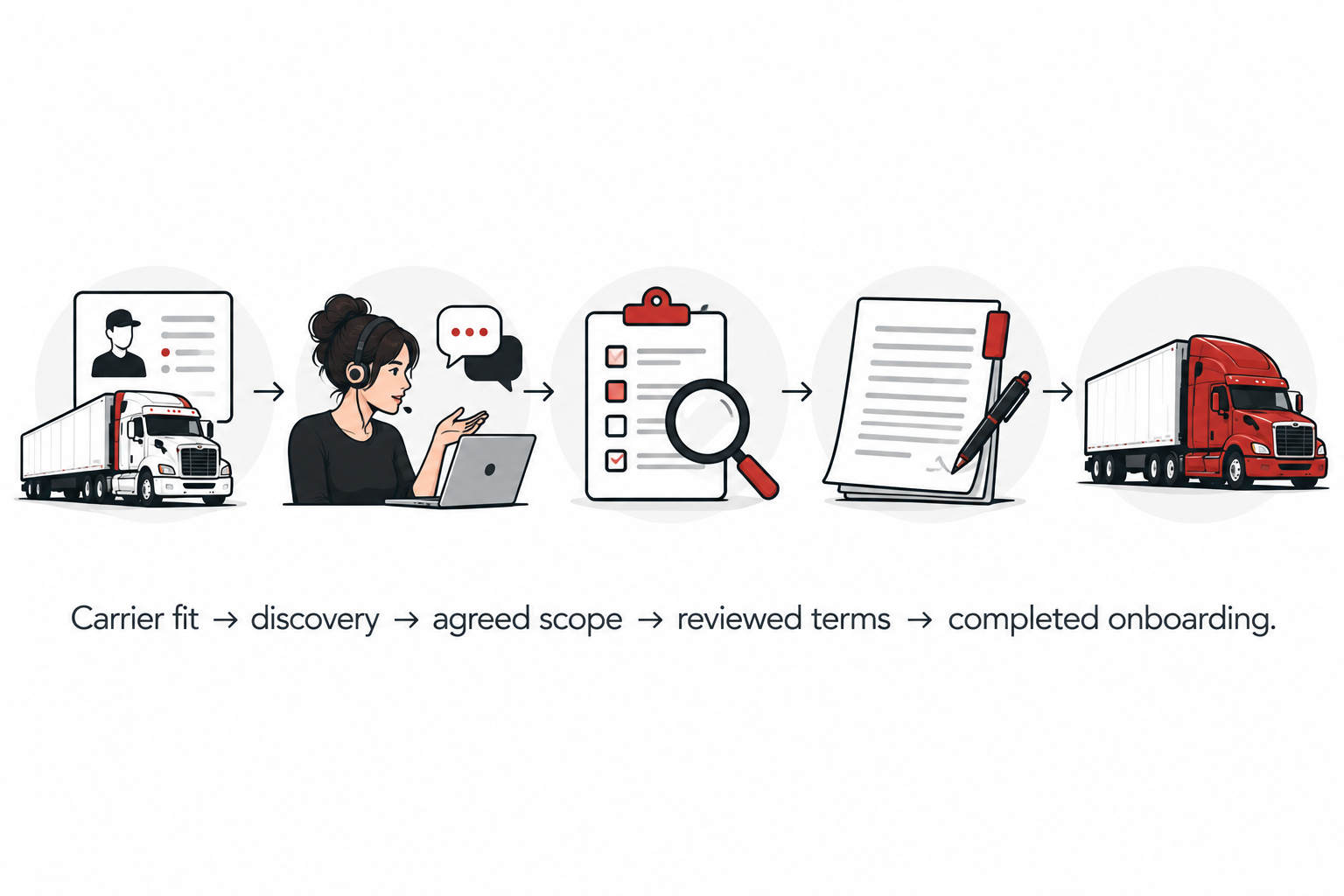
Track qualified conversations, discovery calls, proposals, accepted agreements, completed onboarding, and retained clients as separate stages. Record why a prospect was not a fit. That information helps you improve the offer without simply increasing outreach volume.
Do not call a verbal expression of interest a paying client. The pipeline should show what has actually happened and what remains unresolved.
Frequently asked questions
Should I offer the lowest fee to win a first client?
Price should match the agreed scope and your cost of delivering it. A fee that makes reliable service impossible is not a sustainable advantage.
Can I promise a weekly gross amount?
Avoid promises you cannot control or substantiate. Explain your decision process and reporting standards instead of guaranteeing freight revenue.
What should happen after a carrier agrees?
Complete the carrier-onboarding checklist and reviewed agreement before managing a live assignment. A sales conversation is not operational onboarding.
Make the service specific before promoting it
Use the dispatch agreement checklist to clarify what you are selling. For the underlying operating skills, review Trucking Territory's course curriculum.
Sources and further reference
Worked scenarios and checklists in this article are educational examples or editorial recommendations, not promised business results.
