How to Start a Truck Dispatching Business: A Controlled Launch
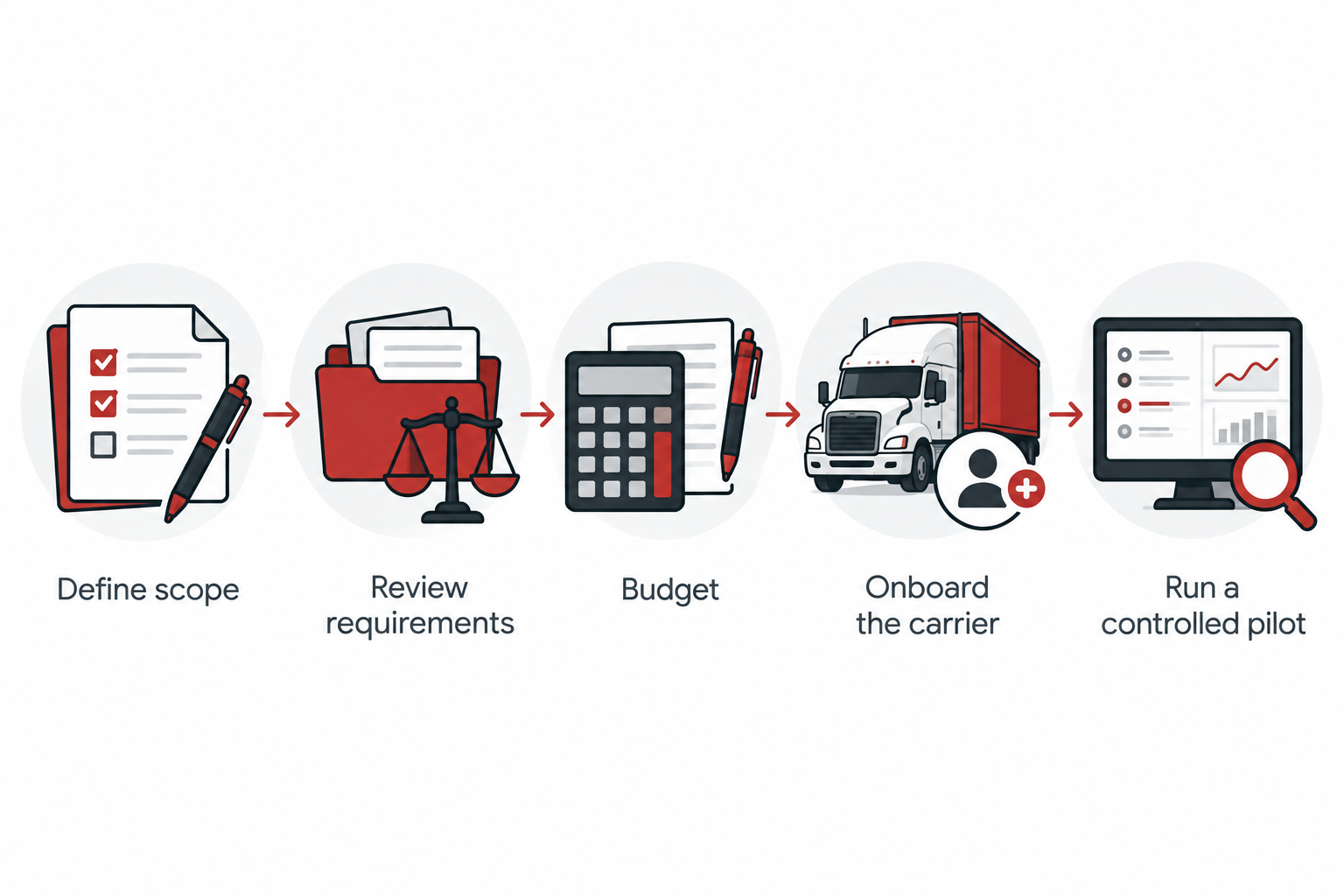
To start a truck dispatching business, define the service you will provide, review the legal and commercial arrangement, establish the necessary business infrastructure, and test your workflow before accepting live responsibility. The goal is not to launch the fastest. It is to know exactly what you can deliver and what you are authorized to do.

Define a narrow first service
Begin with one clear operating model. State which equipment you understand, the coverage hours you can provide, the carrier profile you can support, and the tasks included in your fee. Avoid offering every equipment type, every region, and continuous support before you have a process for any of them.
A useful scope statement describes actions rather than outcomes: research suitable freight, prepare load comparisons, communicate approved terms, maintain trip updates, and organize agreed documents. “We guarantee profitable loads” is not an operational scope you can reliably control.
Also list exclusions. Who handles safety management, claims, accounting, permit decisions, and emergency coverage? Unassigned responsibilities tend to surface at the worst possible time.
Separate business setup from transportation authorization
Choose your structure, registration, banking, bookkeeping, and insurance arrangements with advisers familiar with your situation. The SBA's business-launch resources are a starting point for U.S. business setup, not a substitute for individual legal or tax advice.
Separately review the proposed dispatch activities. Use the dispatcher-versus-broker explanation and the licensing guide to prepare questions for a transportation attorney. Registering an LLC does not, by itself, answer whether the transportation activities require additional authority.
Cross-border ownership or remote work adds separate questions. Do not assume that a U.S. entity resolves the obligations of a person operating from another jurisdiction.
Build a budget with a downside case
List setup costs separately from recurring costs. Then add the expenses that vary with activity. Use supplier quotes and your actual circumstances rather than copying a generic startup total from a blog.
| Budget category | Planning question |
|---|---|
| Setup and professional review | What must be completed before accepting a client? |
| Software and communication | Which subscriptions are necessary and permitted? |
| Client acquisition | What will you spend before collecting a fee? |
| Administration | Who handles records, bookkeeping, and support? |
| Cash reserve | What happens if collections are delayed or a client pauses? |
Build a scenario with fewer billable weeks than you hope for. If the business only works when every truck is active and every invoice is collected immediately, the model is too fragile to use as a launch decision.
Put the carrier relationship in writing
Prepare a reviewed service agreement covering scope, authority to act, approval limits, compensation, billing, confidentiality, access, termination, and handoff. The agreement checklist helps you prepare the business decisions that counsel needs to understand.
Define the fee base precisely. A percentage of “gross” can mean different things to different people. Specify how canceled loads, adjustments, accessorials, and disputed charges affect the fee. Keep the carrier's transportation revenue separate from your service invoices.
Onboard before searching for the first live load
A carrier's name and truck count are not enough. Collect the actual equipment profile, authorized contacts, availability process, lane preferences, commercial limits, document workflow, and escalation instructions.
Provision appropriate system access and verify identities through trusted channels. Establish which person can approve a load and how approval is recorded. Do not discover after booking that your contact lacked the authority to authorize the shipment.
Use a single onboarding record as the operating reference. Reconfirm details when they change rather than treating the first intake form as permanently correct.
Run a controlled service pilot
Define a small, explicit scope that matches your verified competence and capacity. Agree on the review period, coverage, escalation support, reporting format, and conditions for pausing the service. A pilot still involves real responsibilities; it is not permission to learn through avoidable errors on a client's truck.
Track what happened, not just the revenue booked. Review rejected loads, late updates, missing documents, unresolved approvals, and time spent per truck. Correct recurring problems before increasing the scope.
Frequently asked questions
How much does it cost to start?
There is no single reliable total without a location, business model, software choices, and professional-review scope. Build a line-item budget and obtain current quotes for your actual setup.
Should I find clients before learning operations?
You can research client needs early, but do not accept operational responsibility before you can deliver the agreed service. Marketing activity does not establish readiness.
How many trucks should a beginner take?
There is no universal safe number. Start from the workload, support, equipment complexity, and demonstrated response capacity, then set a conservative limit with the carrier.
Complete one launch gate at a time
Use Trucking Territory's training to develop the operational skills, then complete business, agreement, access, and workflow reviews separately. A course and a business launch are related projects, not the same deliverable.
Sources and further reference
Worked scenarios and checklists in this article are educational examples or editorial recommendations, not promised business results.
