Flatbed Dispatching: Load Details, Securement Questions, and Trip Planning
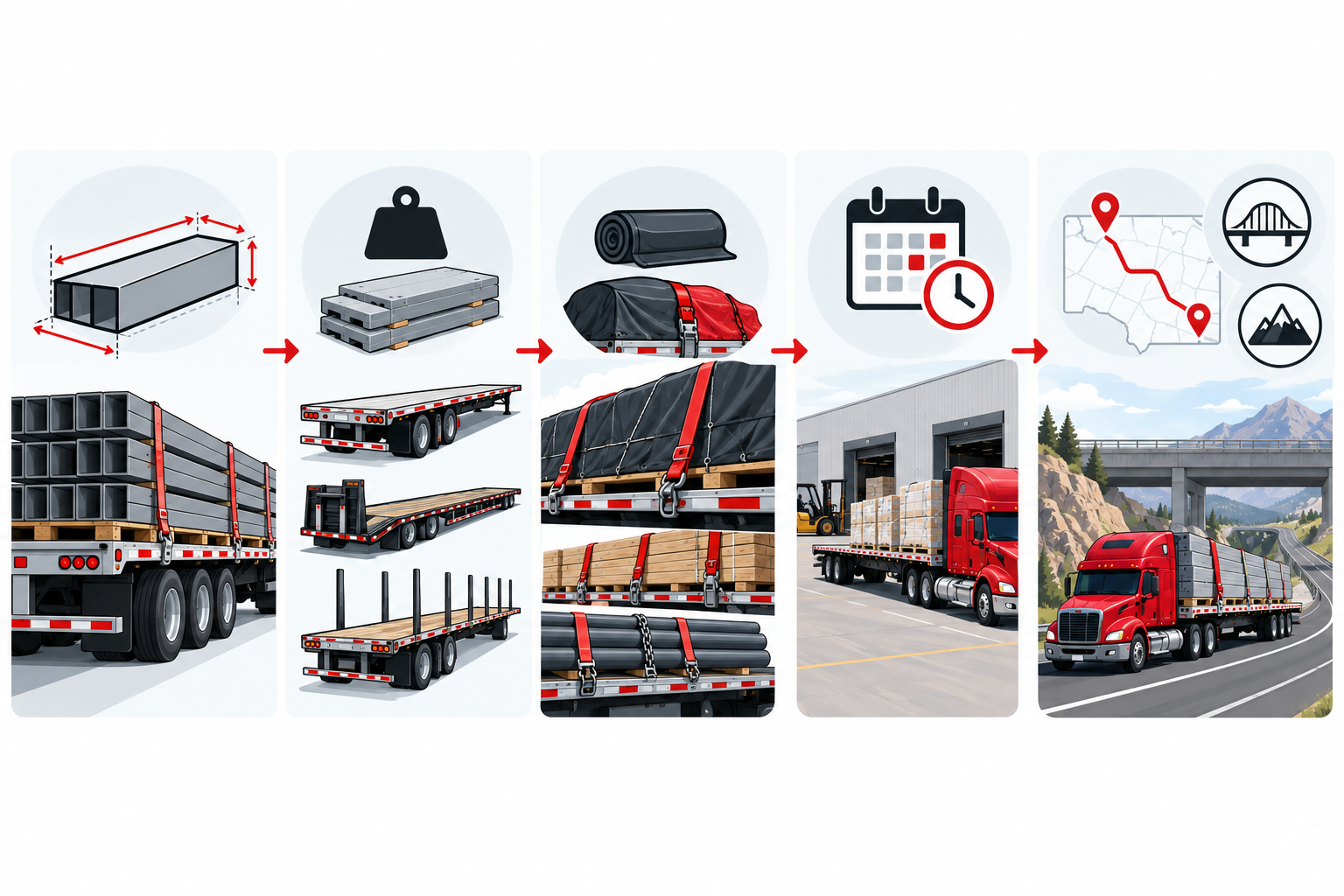
Flatbed dispatching requires the dispatcher to gather more load-specific physical details before a rate can be evaluated responsibly. Dimensions, weight, trailer type, tarping requirements, appointment timing, route constraints, and carrier procedures can matter before the truck is even considered for the freight.

Start with the exact trailer and carrier capability
“Flatbed” is a broad category.
The carrier profile should identify the equipment configuration and any operating limits the dispatcher is authorized to use for load search.
Record:
- trailer type;
- available deck length;
- carrier-approved maximums or restrictions;
- tarping capability;
- current truck location;
- driver-reported availability;
- preferred lanes;
- commodities or special work the carrier does not accept.
Do not guess equipment capacity from an online chart. Use the carrier's actual equipment information.
Ask for dimensions and weight early
A broker call should clarify the physical load before rate negotiation.
Useful questions include:
- commodity;
- total weight;
- length;
- width;
- height;
- number of pieces;
- whether the load is stackable or unusual;
- whether tarps are required;
- whether additional equipment is required;
- pickup and delivery method;
- appointment details.
The driver and carrier remain responsible for safety and securement decisions. The dispatcher's role is to collect and transmit accurate information, not provide remote securement instructions outside their competence.
Route and timing can change the decision
Oversize or specialized loads can create route, permit, or timing questions. Those issues should be escalated to the carrier's responsible safety or compliance process.
Even a standard flatbed load can have time-consuming loading, tarping, or unloading.
Compare:
- deadhead to pickup;
- pickup appointment;
- estimated loading complexity;
- delivery appointment;
- driver-reported hours;
- next-market position.
A rate should be viewed in that operational context.
Separate the rate from the work requirement
Consider two fictional loads:
| Factor | Load A | Load B |
|---|---|---|
| Pay | $2,900 | $2,650 |
| Loaded miles | 850 | 790 |
| Deadhead | 45 | 25 |
| Tarps | Required | Not required |
| Multi-stop | No | No |
| Tight delivery | Yes | No |
A dispatcher should not automatically choose A. The carrier may value time, labor, risk, destination, or equipment wear differently.
Confirm special terms in writing
If the broker and carrier agree to additional compensation or specific load conditions, confirm them in the rate confirmation or another approved written record before dispatching the driver.
Review:
- agreed rate;
- commodity;
- dimensions / weight where relevant;
- pickup and delivery;
- tarping or additional service language;
- stop information;
- accessorial terms;
- cancellation terms;
- any load-specific instruction.
Do not rely on a verbal promise that is absent from the final document.
Give the driver the verified load facts
A clean dispatch message can include:
- pickup address and appointment;
- load reference;
- commodity;
- broker-provided dimensions and weight;
- verified special requirements;
- delivery information;
- contacts;
- document expectations.
If the driver identifies an equipment or safety concern, pause and follow the carrier's escalation procedure.
Flatbed securement is not a dispatcher shortcut
Cargo securement is a safety-critical field. A dispatcher should not use a generic article or old experience to instruct a driver contrary to carrier procedures or regulations.
A good dispatcher knows the limit of the role: collect complete information, communicate it accurately, and involve the responsible safety professionals.
Build a flatbed pre-booking record
A useful pre-booking record separates broker-provided facts from carrier or driver decisions. For example, the broker can provide commodity, dimensions, weight, tarping requirement, locations, and appointment times. The carrier or driver can then decide whether the equipment and safety process are appropriate.
This distinction matters because dispatchers often work remotely. A photograph or load-board note cannot replace an on-site equipment or securement decision. When a physical detail is unclear, the correct action is to pause and obtain clarification.
A flatbed record can also include a “source” column: broker call, RC, shipper instruction, driver report, or carrier policy. That makes later disagreements easier to investigate.
Frequently asked questions
Are flatbed rates always higher?
No. Rates vary by lane, market, freight, timing, equipment, and current supply-demand conditions.
Should a dispatcher know securement rules?
A dispatcher should understand that securement affects load feasibility and communication, but operational responsibility and advice should follow the carrier's safety process and applicable rules.
What is the best beginner exercise?
Take a fictional flatbed truck profile and compare three loads only after collecting dimensions, weight, tarping, appointments, and destination information.
Make the physical load part of the decision
Use the equipment comparison page, HOS guide, and rate-confirmation checklist when building flatbed training cases.
Sources and further reference
Worked scenarios, comparisons, and checklists in this article are educational examples or editorial recommendations. They are not promises of employment, rates, revenue, or profit.
