How to Book Loads With New Authority: A Dispatcher’s Research Workflow
A new motor carrier authority can make load search more restrictive because some brokers apply their own authority-age, insurance, safety, commodity, or payment policies. The dispatcher should not rely on an old “brokers that accept new authority” list. Build a repeatable eligibility-verification process and date-stamp every result.
Build the carrier profile before calling brokers
For a newer authority, create one accurate reference record containing:
- legal carrier name;
- USDOT and MC information where applicable;
- authority status;
- authority effective date;
- insurance information;
- equipment;
- driver and truck availability;
- operating lanes;
- factoring information if the carrier uses it;
- commodities or services excluded by the carrier.
This prevents the dispatcher from giving different information on different calls.
Authority age is only one filter
A broker may evaluate multiple factors.
Common questions can involve:
- how long authority has been active;
- insurance;
- safety information;
- equipment;
- cargo;
- references;
- factoring eligibility;
- lane or customer requirements.
The broker's policy can change. A dispatcher should treat a “yes” or “no” as a dated result, not a permanent industry rule.
Use a broker eligibility research log
| Field | Example |
|---|---|
| Broker | Fictional Broker A |
| Date checked | 2026-09-30 |
| Load / lane | Chicago → Atlanta |
| Authority-age requirement | Confirmed on call |
| Equipment accepted | Dry van |
| Setup status | Not completed |
| Contact source | Verified business channel |
| Result | Eligible / not eligible / unclear |
| Next action | Submit approved setup docs |
This is more useful than a copied list with no dates.
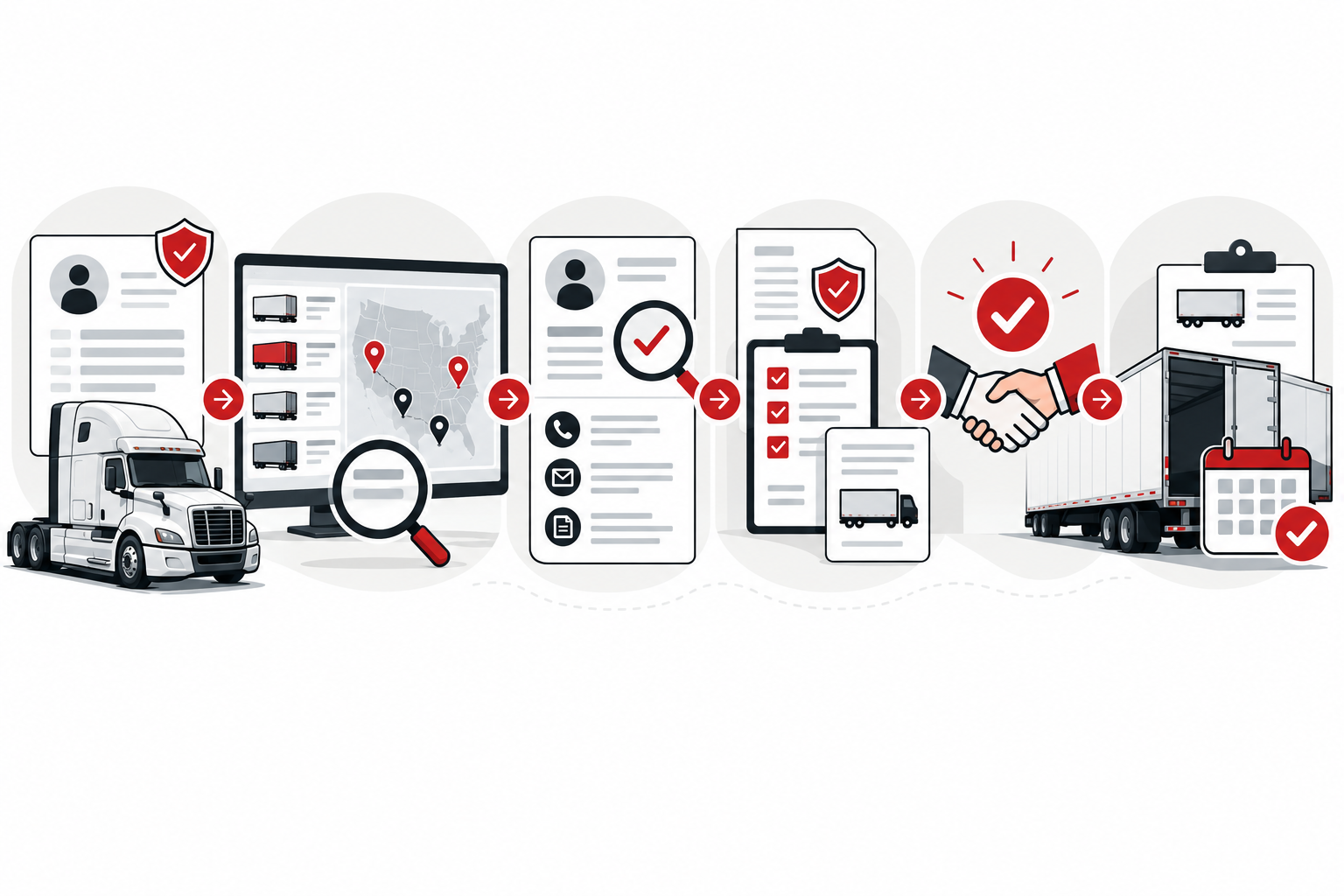
Search the load board in two passes
Pass 1: operational fit
Filter for:
- equipment;
- realistic pickup radius;
- date;
- destination;
- carrier preferences.
Pass 2: broker eligibility
For the remaining loads, check whether the broker will work with the carrier.
This avoids spending time verifying a broker for freight the truck could never haul.
Verify the broker before sending documents
New carriers can be under pressure to secure freight quickly. That makes fraud controls more important, not less.
Use the broker verification workflow before transmitting sensitive carrier documents or relying on payment changes.
At minimum:
- verify business identity;
- confirm authority information from appropriate sources;
- use trusted contact information;
- compare email domains and phone numbers;
- investigate unexpected changes;
- record who confirmed the setup.
FMCSA's broker registration page explains that property brokers need broker authority, a $75,000 surety bond or trust fund, BOC-3 process-agent designation, and the applicable registration process. That official status is one part of the review; it does not tell you the broker's internal new-authority policy.
Do not negotiate before knowing whether the load is bookable
A beginner may spend ten minutes negotiating a rate and only then learn that the broker will not set up the carrier.
A better call sequence is:
- identify the load;
- confirm it is still available;
- ask any critical operational questions;
- confirm carrier eligibility / setup requirements;
- negotiate if the load remains viable;
- obtain written terms.
This saves time.
If the broker declines
Record the reason accurately.
Possible outcomes:
- authority age too new;
- insurance issue;
- equipment mismatch;
- customer-specific restriction;
- factoring / credit problem;
- load no longer available;
- broker will not disclose or policy unclear.
Do not misrepresent authority age or use another carrier's information.
Then move to the next option.
Build alternatives before the truck is empty
For newer authorities, proactive search matters because the available broker pool may be smaller.
The dispatcher can:
- begin research earlier;
- keep a dated record of brokers that have successfully set up the carrier;
- track lanes where the carrier has had workable options;
- use multiple legitimate freight sources if authorized;
- avoid relying on one broker or one platform.
The purpose is resilience, not volume for its own sake.
Frequently asked questions
Which brokers work with new authority?
Policies change and can differ by load or customer. Use a current eligibility check rather than a permanent public list.
Should I pay someone for a “guaranteed new authority broker list”?
Treat static lists cautiously. Verify every broker independently and confirm the current policy.
Does active broker authority guarantee payment?
No. Authority is not the same as creditworthiness or payment performance. Use the carrier's full broker-review process.
Turn the search into a documented process
Use the load-search guide, broker verification page, and carrier onboarding checklist before managing new-authority freight.
Sources and further reference
- FMCSA — Broker Registration
- DAT — Official site / current product information
- Truckstop — Official site / current product information
Worked scenarios, comparisons, and checklists in this article are educational examples or editorial recommendations. They are not promises of employment, rates, revenue, or profit.
