Power Only Dispatching: How to Evaluate Trailer-Provided Loads
Power-only dispatching means the carrier supplies the tractor while a trailer is supplied through the freight arrangement or network. The dispatcher must evaluate tractor availability, trailer pickup and drop requirements, route timing, deadhead, facility workflow, carrier eligibility, and the next reposition rather than treating the trip like a standard trailer-owned load.
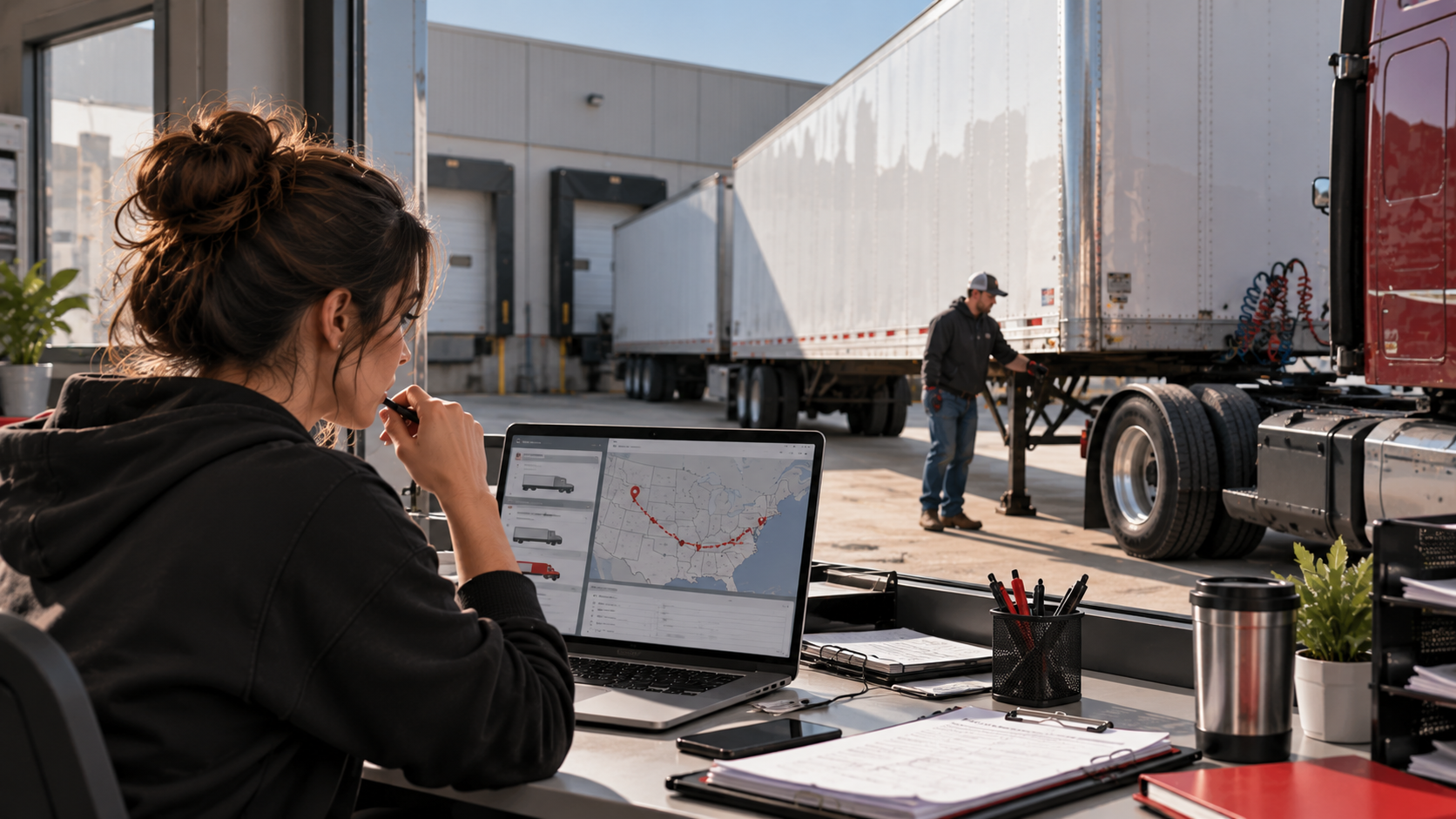
Understand what “power only” changes
In a conventional dry-van operation, the carrier may control both tractor and trailer. In power-only work, trailer availability and trailer handoff become additional operating variables.
The dispatcher should confirm:
- tractor location and availability;
- the trailer source;
- pickup facility;
- trailer number / identification process when provided;
- drop or live-unload expectations;
- destination trailer procedure;
- whether the next load requires repositioning;
- carrier-approved equipment compatibility.
Do not assume every power-only program follows the same procedure.
Trailer handoff can shape the entire trip
A power-only load can involve preloaded trailer pickup and drop-and-hook operations. It can also involve delays if the correct trailer is not ready or the facility process changes.
Record:
- where the tractor arrives;
- who provides trailer information;
- check-in instructions;
- loaded trailer status;
- destination drop process;
- what happens to the tractor afterward.
A strong rate does not eliminate a poor repositioning plan.
Compare the whole cycle
Suppose a power-only trip pays $1,800 for 520 loaded miles, but the tractor must travel 90 miles to the trailer and 70 miles after delivery to the next usable market.
Loaded RPM = $3.46
Cycle miles = 680
Cycle RPM ≈ $2.65
This is a training comparison, not a profit forecast. It demonstrates why a dispatcher should model more than the loaded segment.
Amazon Relay is one example, not the definition
Amazon Relay publicly describes power-only freight using thousands of pre-loaded trailers in its network. Relay also states that Amazon loads are tendered directly to approved, onboarded carriers through Relay rather than third-party load boards.
That makes current carrier eligibility important.
As of September 30, 2026, Relay's FAQ states that onboarding typically requires a DOT number with interstate authority active for at least 180 days, a valid MC number, acceptable safety criteria, and specified insurance coverage, among other requirements.
These requirements can change. Verify them directly before advising a carrier to build an operating plan around Relay.
Watch trailer and facility details
Power-only dispatching can fail when the load is treated as “just hook and go.”
Confirm:
- facility hours;
- trailer availability process;
- trailer condition escalation procedure;
- load seals or documents when applicable;
- drop location;
- whether the trailer stays with the tractor for multiple legs;
- whether another trailer is assigned at destination.
The driver and carrier handle safety and equipment-condition decisions.
Plan the next move before booking
A power-only load may end at a facility where the tractor is empty but far from the next suitable trailer source.
Include the next-market question in the original evaluation:
- Is another load likely from the destination?
- Does the carrier have a contract or program with follow-on freight?
- How much deadhead may be required?
- Is the driver approaching an HOS constraint?
- Does the truck need to return to a preferred area?
Power-only document control deserves its own checklist
Because the carrier may handle a trailer it does not own, the dispatch record should make trailer identity and handoff events easy to trace. Depending on the program, useful fields can include trailer number, pickup facility, seal information when supplied, drop location, and any written trailer-condition or damage-reporting procedure.
The dispatcher should not certify trailer condition remotely. The purpose of the checklist is to make sure the driver and carrier know which process to follow and that the next dispatcher can understand what happened.
Frequently asked questions
Does power only mean the carrier does not need a trailer?
For the specific power-only movement, another party or program supplies the trailer. The carrier still needs to meet the equipment and operating requirements of the work.
Is Amazon Relay the only power-only source?
No. Power-only arrangements exist outside Amazon. Each program has its own terms and eligibility.
Are power-only loads always drop and hook?
No. Verify the exact facility and trailer procedure.
Plan the tractor, trailer, and next market together
Use the deadhead guide, HOS guide, and the separate Amazon Relay guide when evaluating power-only work.
Sources and further reference
Worked scenarios, comparisons, and checklists in this article are educational examples or editorial recommendations. They are not promises of employment, rates, revenue, or profit.
