Box Truck Dispatching: Load Boards, Equipment Fit, and Route Economics
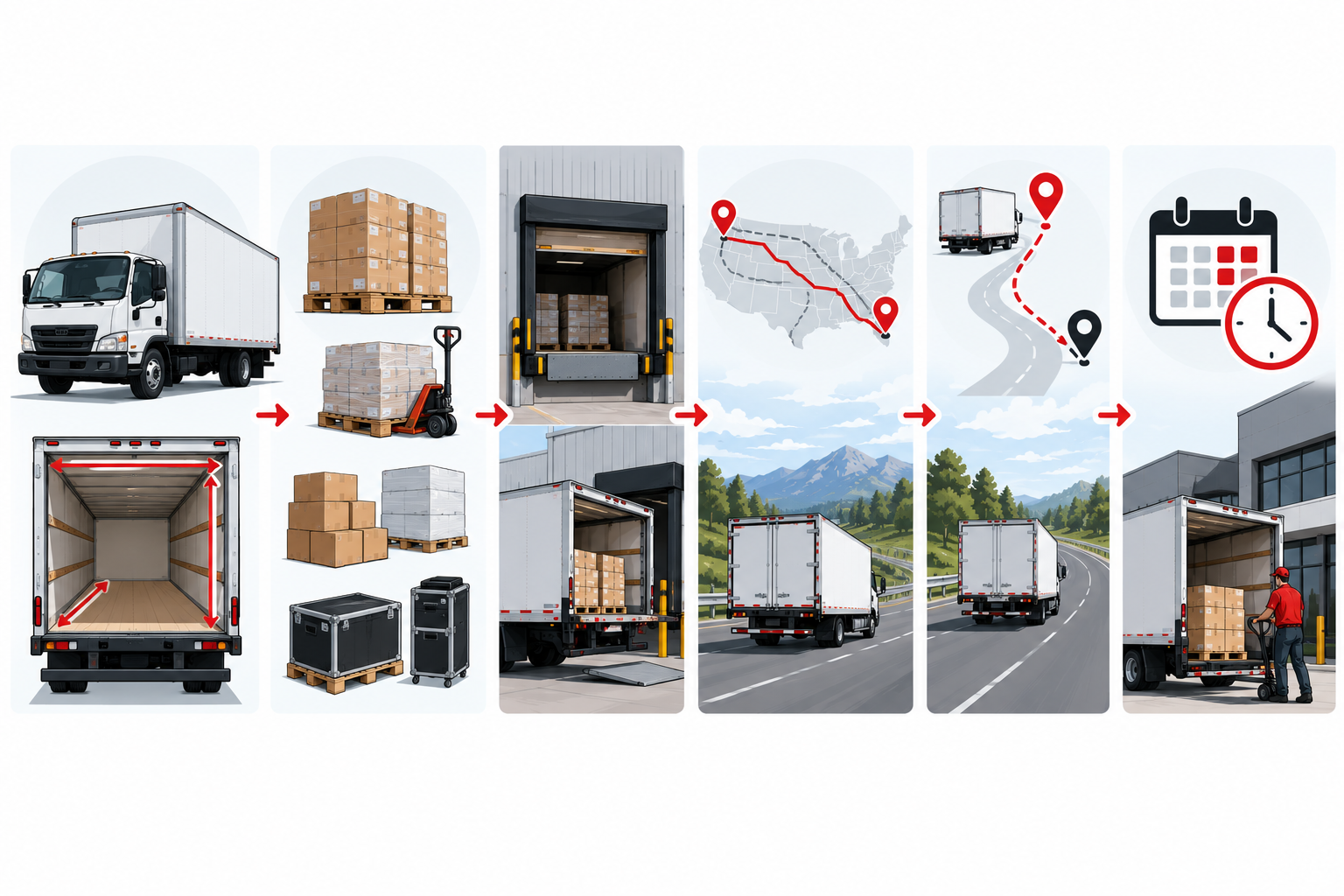
Box truck dispatching should begin with the exact truck profile: cargo-box dimensions, payload limits supplied by the carrier, dock or liftgate capability, current location, and operating model. “Box truck” is not one standardized load capacity, so the dispatcher must verify fit before comparing rates.

Build the box-truck profile
Record the actual equipment the carrier operates.
Useful fields include:
- cargo box dimensions;
- payload information supplied by the carrier;
- dock height or loading configuration;
- liftgate availability if applicable;
- pallet-jack or other equipment if the carrier uses it;
- current location;
- service area;
- driver availability;
- local, regional, or long-haul preference.
Do not copy a capacity figure from a different truck model.
Ask whether the facility can handle the truck
A load may fit the cargo box but fail operationally at pickup or delivery.
Clarify:
- loading dock or ground loading;
- liftgate requirement;
- palletized or loose freight;
- forklift availability;
- number of pieces;
- dimensions;
- total weight;
- appointment;
- facility restrictions.
These questions can prevent a wasted trip.
Search the load board with realistic filters
Some load boards offer partial-load, straight-truck, or box-truck relevant freight. The available labels and plan features vary by platform.
Use the actual truck location and realistic radius. A wide search radius can create attractive-looking loads that require too much unpaid repositioning.
Compare route economics with total miles
Example:
- Current truck location → pickup: 55 miles
- Pickup → delivery: 310 miles
- Load pay: $1,150
Loaded RPM ≈ $3.71
All-in miles = 365
All-in RPM ≈ $3.15
The difference matters. For shorter box-truck work, deadhead can have a large percentage impact.
Add tolls, return strategy, next-market demand, and carrier-specific cost considerations before making a recommendation.
Verify broker requirements
Not every broker or load is available to every carrier or equipment type.
For each opportunity, verify:
- carrier authority and eligibility;
- equipment acceptance;
- insurance expectations;
- broker identity;
- payment setup;
- any authority-age policy.
Policies can change, so a static broker list becomes outdated quickly.
Watch for “too good to be true” freight
High-paying small-truck loads can be used in fraud or identity-theft attempts.
Do not bypass verification because the rate is attractive.
Warning signs can include:
- unexpected email-domain changes;
- payment instructions that do not match the verified broker;
- requests for sensitive carrier documents before identity is confirmed;
- pressure to act outside normal process;
- inconsistent contact details.
Follow the carrier's fraud-prevention procedure.
Local and regional box-truck work changes the daily rhythm
Box trucks can operate in local, regional, or longer-distance patterns. A local route may make tolls, parking, multiple stops, dock compatibility, and same-day appointment timing more important than a long-haul linehaul comparison.
For training, compare one long single-stop load with a shorter multi-stop option. Record not only revenue and miles but also the number of appointments, estimated handling time, deadhead after delivery, and whether the truck must return to a home market. This makes the dispatcher think in cycles rather than isolated postings.
If the carrier performs final-mile or white-glove work, the service requirements can be substantially different from general freight. Do not assume a generic box-truck article covers those specialized operations.
Keep stop count visible in the comparison
For box-truck work, multiple pickups or deliveries can materially change the work even when the loaded mileage is short. Record stop count and appointment sequence beside the rate. If compensation changes because of added stops, confirm the revised commercial terms in writing before dispatching the driver.
Frequently asked questions
Can a box truck use Amazon Relay?
Amazon Relay currently describes freight options for multiple equipment types, including box trucks, subject to current carrier and equipment requirements. Verify the live Relay requirements before planning around it.
Is box truck dispatching easier than semi-truck dispatching?
It has a different equipment profile, but still requires load fit, timing, broker verification, economics, and document control.
What should I record before searching?
Cargo dimensions, carrier-approved payload information, loading configuration, current location, availability, and lane preferences.
Treat the truck as a unique piece of equipment
Use the load-search guide, deadhead article, and broker verification guide to create a box-truck-specific checklist before booking live freight.
Sources and further reference
Worked scenarios, comparisons, and checklists in this article are educational examples or editorial recommendations. They are not promises of employment, rates, revenue, or profit.
