Hotshot Dispatching: Load Search, Equipment Fit, and Daily Workflow
Hotshot dispatching uses many of the same principles as class-8 truck dispatching, but equipment profiles and load fit can differ substantially. A dispatcher should search from the actual pickup, trailer, dimensions, payload, driver availability, and carrier operating model rather than treating every “hotshot” load as interchangeable.

Define the hotshot equipment exactly
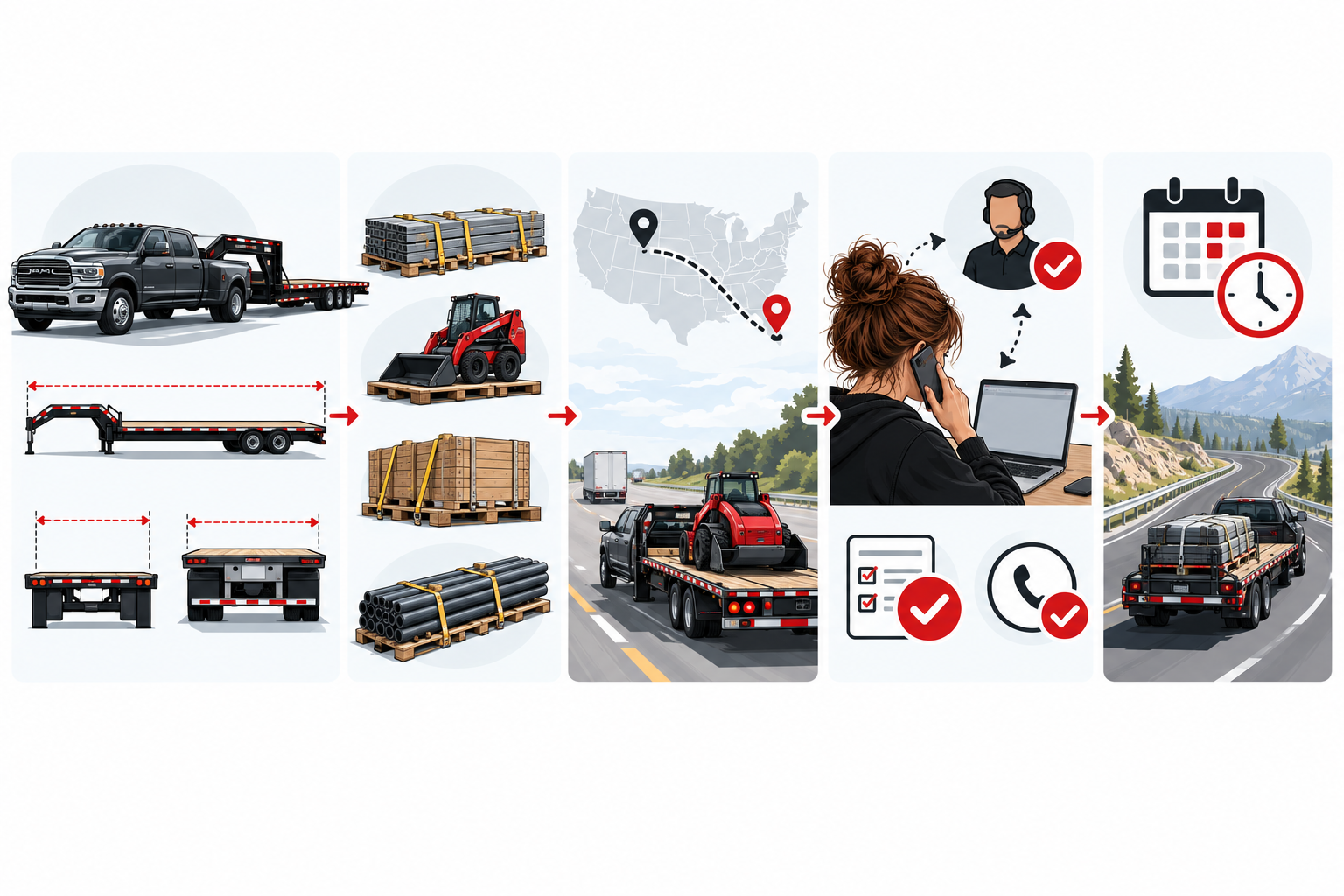
A hotshot operation may use different pickup and trailer combinations. Do not rely on a generic internet definition when deciding load fit.
The dispatch record should contain carrier-approved information such as:
- truck type;
- trailer type and length;
- payload / operating limitations supplied by the carrier;
- current location;
- availability;
- driver-reported HOS where applicable;
- operating lanes;
- commodities or services excluded by the carrier.
The dispatcher uses this profile to filter search results.
Search by fit before rate
Hotshot freight can be attractive because of flexibility, but small differences in dimensions or weight can make a load unsuitable.
Ask for:
- commodity;
- number of pieces;
- length / width / height;
- total weight;
- pickup and delivery method;
- tarp or equipment requirements;
- appointments;
- whether the facility can handle the equipment;
- route or permit questions to escalate.
Reject unresolved equipment mismatches before comparing economics.
Deadhead has a large effect on shorter loads
Hotshot loads can be shorter than long-haul tractor-trailer freight, so repositioning distance can significantly change the all-in result.
Example:
- Load pay: $900
- Loaded miles: 260
- Deadhead: 80
- Total miles: 340
Loaded RPM = $3.46
All-in RPM = $2.65
This example is a training calculation, not a profitability forecast. The carrier's costs and operating model determine whether the load is acceptable.
Check pickup timing carefully
A shorter-distance load may have a very short pickup expectation.
Before booking:
- confirm current truck location;
- ask the driver or carrier for availability;
- check time zone;
- confirm check-in requirements;
- estimate realistic travel;
- identify unresolved loading requirements.
Do not assume a smaller truck can always make a faster pickup.
Verify the broker and written terms
Hotshot carriers can be targeted by the same identity, payment, and cargo-fraud risks as other carriers.
Use a repeatable broker-verification process and verify unexpected changes through trusted contact information. Do not send sensitive carrier documents to an unverified email simply because the load appears on a marketplace.
Then review the RC for:
- correct carrier;
- pickup and delivery;
- commodity;
- dimensions / weight where listed;
- agreed rate;
- special equipment terms;
- accessorials;
- cancellation language;
- payment instructions.
Avoid over-specializing too early
A new dispatcher may try to serve dry vans, hotshots, box trucks, reefers, and flatbeds at the same time. That creates many equipment-specific rules and broker expectations.
A controlled approach is to learn one equipment profile deeply, then expand.
Create a lane-and-equipment learning log
Hotshot dispatchers benefit from recording why loads were rejected, not only which loads were booked. After each practice search, save several examples with the reason: too much deadhead, dimensions do not fit, pickup window unrealistic, destination unwanted, broker policy incompatible, or rate below the carrier's limit.
After a few weeks, this log becomes a training asset. It shows which constraints occur repeatedly and which questions should move earlier in the call. The purpose is not to predict the market from a small sample; it is to improve the dispatcher’s own process.
Separate booking speed from booking quality
Hotshot freight can disappear quickly, but speed should not remove the verification steps. A fast dispatcher uses a prepared truck profile and a short question sequence so equipment, timing, broker identity, and written terms are checked efficiently. Skipping those controls may save minutes and create hours of recovery work later.
Frequently asked questions
Which load board is best for hotshot loads?
Availability changes by platform and market. Compare current equipment filters, access rules, relevant load volume, and pricing rather than assuming one universal best choice.
Do hotshot dispatchers use the same RPM formula?
The arithmetic is the same, but shorter loads and deadhead can change the interpretation. Always distinguish loaded from total miles.
Can I dispatch hotshot trucks without understanding dimensions?
No. Load fit is central. Get the actual equipment profile and the broker-provided shipment dimensions before recommending a load.
Build the equipment profile first
Use the load-search guide, deadhead guide, and broker verification checklist to create a hotshot-specific operating worksheet.
Sources and further reference
Worked scenarios, comparisons, and checklists in this article are educational examples or editorial recommendations. They are not promises of employment, rates, revenue, or profit.
