How to Negotiate Freight Rates With Brokers
To negotiate a freight rate, confirm the shipment requirements, understand the carrier's operating limits, and explain a specific price request based on the actual trip. Good negotiation is not a trick for making a broker pay more. It is a clear discussion of a workable service at terms the carrier can accept.

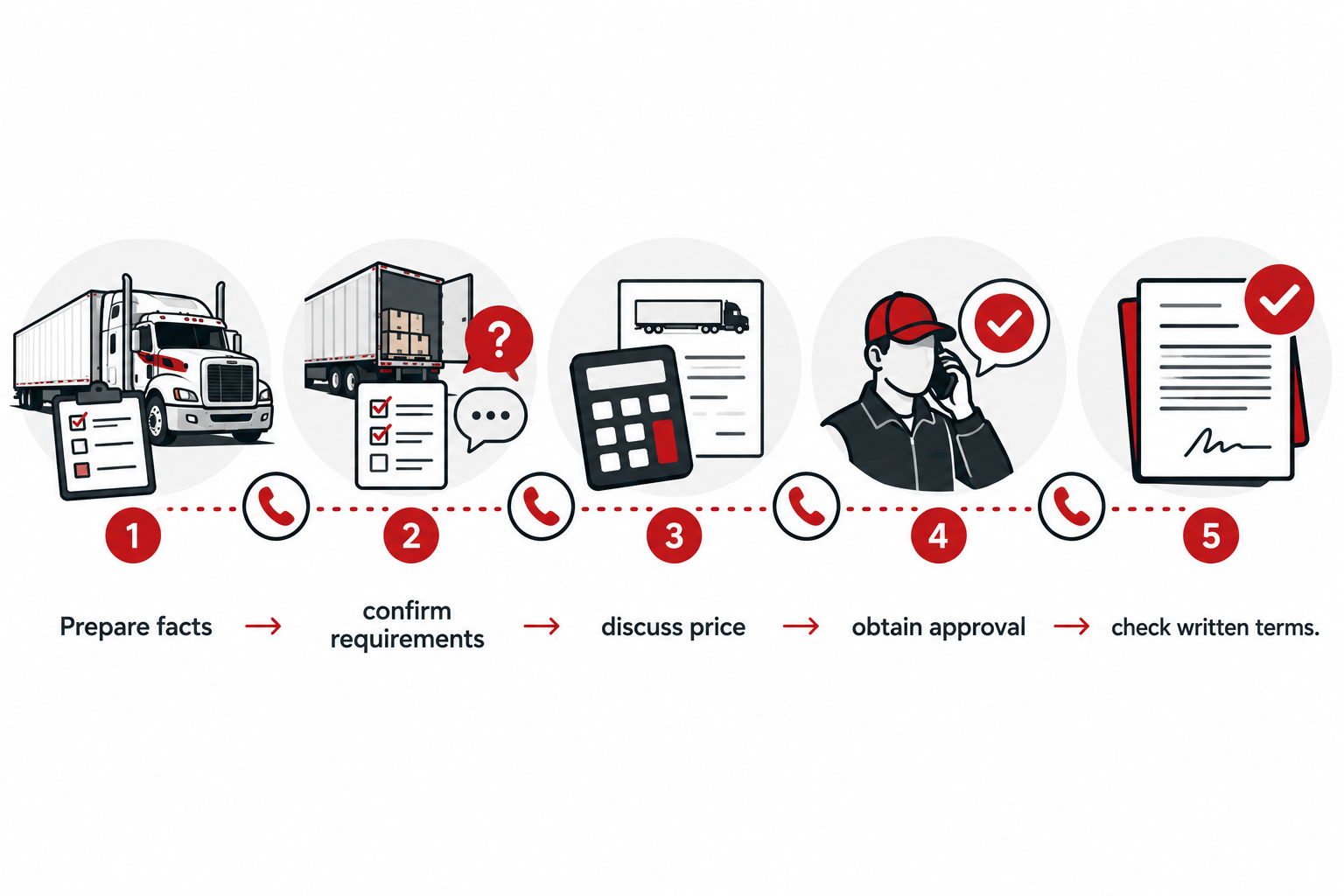
Prepare the truck facts before the call
Know the equipment, current position, realistic availability, carrier preferences, and approved commercial limits. Calculate the empty approach and total planned movement. Identify the person who can approve the final terms.
Do not call with a price target that is disconnected from the shipment. A load with extra stops, a narrow appointment, or unusual requirements needs a different evaluation from a straightforward movement with the same loaded miles.
Use rate-per-mile calculations as one input. The carrier's decision should also account for truck time, cost, operational risk, and the position after delivery.
Start by confirming the load, not arguing about money
Open with the shipment reference and the capacity you are actually authorized to represent. Ask whether the load is available, then confirm the details needed for evaluation.
I am calling about the posted shipment. I am checking it for the carrier I represent. Could we confirm the pickup and delivery appointments, commodity, weight, equipment requirements, and any special instructions before discussing the final rate?
This is an adaptable practice script, not a representation that a particular carrier has approved a load. Do not claim to have a truck, authority, or capability that you have not verified.
Explain the price request using the trip
Once the shipment is understood, state the requested amount and the operational reason. Keep the explanation brief and factual. Avoid fabricated competing offers, invented urgency, or claims about market conditions that you cannot support.
For this trip, we are accounting for the empty approach and the appointment requirements. Subject to the carrier's final approval, our requested total is $1,950. Is there flexibility to reach that amount?
The $1,950 is a fictional script input, not a market rate. Replace it with a calculation appropriate to the actual carrier and shipment.
Respond to a lower offer without losing the structure
If the broker cannot meet the request, ask whether any genuine shipment condition can change. A wider appointment window or revised stop requirement may alter feasibility or cost. Do not invent flexibility that the shipper or receiver has not approved.
Thank you. At that amount, I need to review the full trip with the carrier. Are the appointment times fixed, and is the rate inclusive of all the currently discussed services?
If the load does not meet the carrier's approved conditions, decline professionally. A negotiation is not unsuccessful merely because it ends without a booking.
Separate the base rate from possible extra charges
Clarify the revenue components and any accessorial conditions before reaching agreement. Ask about the documentation, approval, and timing requirements for detention, additional stops, or other relevant services. Do not assume an unapproved extra charge will rescue an otherwise unsuitable load.
The rate-confirmation overview from TruckingOffice identifies shipment pay, instructions, and potentially important payment or cancellation terms. Use that as a reminder to read the written document, not as a substitute for reviewing the actual agreement.
Close by repeating the terms
Summarize the agreed shipment, total rate, appointments, special requirements, and unresolved conditions. Make clear whether final carrier approval remains outstanding. Request the written confirmation through the verified channel.
Please send the written confirmation reflecting the terms we discussed. We will review the shipment details and obtain any required final approval before confirming acceptance.
Do not treat a verbal discussion as permission to ignore conflicting written terms. If the rate confirmation differs, resolve the discrepancy and preserve the corrected version.
Review negotiations without rewarding bad bookings
Track why calls did or did not lead to suitable loads. Separate price objections from unavailable freight, equipment mismatches, timing problems, and carrier restrictions. Otherwise, a low booking rate may be misread as a negotiation problem when the search criteria are the real issue.
Review the outcome after the trip as well. A higher booked rate that required disproportionate time or created avoidable exceptions may not represent a better operating decision.
Frequently asked questions
Should I always start far above the amount I need?
Use a defensible request grounded in the shipment and carrier's conditions. An arbitrary extreme number can distract from the actual commercial discussion.
Should I claim another broker offered more?
Only communicate truthful, relevant information you are authorized to share. Fabricating leverage is not a sound professional practice.
What if the broker pressures me to confirm immediately?
Follow the carrier's approval and verification process. A short deadline does not remove the need to check whether the assignment is workable.
Practice the complete conversation
Combine this script with the rate-confirmation checklist and load-search workflow. Explore Trucking Territory's course to build the operational understanding behind the call.
Sources and further reference
Worked scenarios and checklists in this article are educational examples or editorial recommendations, not promised business results.
