Reefer Dispatching: Temperature, Timing, Rates, and Common Problems
Reefer dispatching adds temperature-sensitive instructions and tighter operational dependencies to the standard dispatch workflow. A dispatcher still evaluates equipment fit, appointments, deadhead, rate, broker identity, and documents, but should also verify the temperature and handling instructions supplied by the shipment and carrier rather than inventing settings.

Build the reefer equipment profile first
A generic “reefer” label is not enough.
Record the carrier-approved equipment details that matter to search and booking, such as:
- trailer type and operating condition;
- current location;
- earliest pickup availability;
- driver-reported HOS;
- carrier commodity restrictions;
- preferred lanes;
- whether the operation accepts multi-stop or sensitive freight.
The dispatcher should not make mechanical or food-safety claims that belong to the carrier, driver, shipper, or other responsible party.
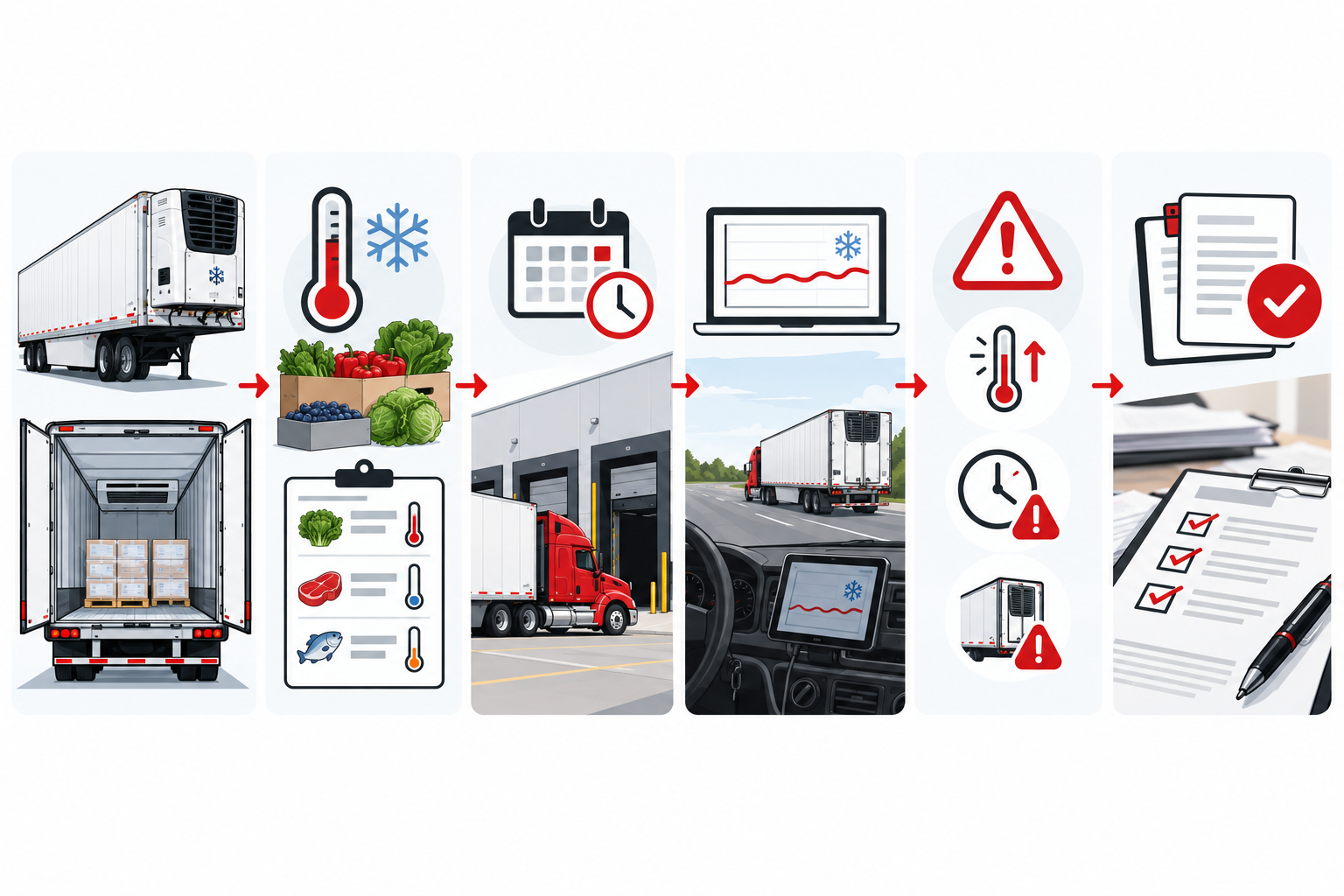
Confirm the temperature instructions from the source
Temperature-sensitive freight can involve requirements for set point, continuous or cycle mode, pre-cooling, product condition, or monitoring. The exact requirement must come from the shipment instructions and responsible parties.
A useful dispatcher checklist asks:
- What temperature instruction is written?
- Is the unit supposed to be pre-cooled?
- Are there loading instructions?
- Is the commodity compatible with the carrier's policy?
- Who should be contacted if the instructions conflict?
Do not “correct” a temperature setting from memory.
Appointment risk can be more important than the posted rate
Reefer facilities can involve strict appointment windows, washout or sanitation expectations, product checks, and longer loading or unloading times.
Before booking, compare:
- truck-to-pickup distance;
- appointment time and time zone;
- facility check-in expectations;
- driver-reported availability;
- delivery schedule;
- potential waiting-time exposure;
- next-market position.
FMCSA's hours-of-service rules remain part of the planning context. Property-carrying drivers generally face the 11-hour driving limit after 10 consecutive hours off duty and the 14-hour window, among other requirements. Use the driver's real status and carrier procedures rather than calculating legal availability from mileage alone.
Evaluate the rate together with delay risk
A reefer load may offer a higher headline rate than a dry-van alternative. The dispatcher should still compare the whole trip.
Example:
| Input | Load A | Load B |
|---|---|---|
| Posted pay | $2,500 | $2,250 |
| Loaded miles | 800 | 720 |
| Deadhead | 90 | 30 |
| Tight appointment | Yes | No |
| Multi-stop | Yes | No |
This table does not decide the load. It reveals the questions that need carrier review.
Clarify accessorial terms before the problem happens
Detention, layover, additional stops, washout, or other accessorial issues depend on actual agreements and evidence.
Before accepting a load, understand:
- when free time begins and ends;
- what check-in or check-out evidence is needed;
- whom to notify during delay;
- whether pre-approval is required;
- how the RC describes accessorials.
Document the event while it is happening, not days later.
Keep the paperwork aligned
A reefer shipment can create more opportunities for conflicting instructions. Keep one current set of documents and note where temperature or handling requirements came from.
The shipment folder may include:
- rate confirmation;
- carrier setup record;
- pickup documents / BOL;
- temperature instruction or related written direction where applicable;
- delay records;
- POD;
- internal trip notes.
The exact documents vary by customer and load.
Common beginner mistakes
Assuming every reefer load is “better paying”
Rates vary by lane, timing, market, commodity, and current conditions. Do not turn an equipment type into an earnings promise.
Copying a temperature from a previous load
Every shipment must be checked independently.
Ignoring waiting time
A strong RPM can be weakened by long delays or operational disruption.
Giving the driver incomplete instructions
Send the verified shipment information through the approved carrier process.
Frequently asked questions
Does the dispatcher control reefer temperature?
The dispatcher may communicate written instructions, but should not substitute personal guesses for the responsible party's directions or the carrier's safety procedures.
Is reefer dispatching harder than dry van?
It introduces additional operational details. Whether it is “harder” depends on training, carrier process, and shipment type.
What should I practice first?
Take one fictional reefer load and build a complete pre-booking checklist, including temperature-source verification and delay documentation.
Learn the equipment before optimizing the rate
Use the equipment comparison guide, detention guide, and rate-confirmation checklist together before practicing reefer load selection.
Sources and further reference
Worked scenarios, comparisons, and checklists in this article are educational examples or editorial recommendations. They are not promises of employment, rates, revenue, or profit.
