Self-Dispatch vs Dispatch Service: A Decision Guide for Owner-Operators
Self-dispatching gives an owner-operator direct control over load search, negotiation, documents, and trip planning. Hiring a dispatch service can reduce the owner's administrative workload but introduces service fees, access permissions, and a business relationship that needs clear boundaries. Neither model is automatically better.

What self-dispatching involves
An owner-operator who self-dispatches may handle:
- load-board search;
- broker calls;
- load evaluation;
- rate negotiation;
- broker setup;
- rate-confirmation review;
- trip planning;
- appointment communication;
- documents;
- follow-up and closeout.
That work happens in addition to driving or managing the truck operation.
The main advantage is control. The main constraint is time and attention.
What a dispatch service can take on
A carrier-side dispatch service may perform an agreed set of support tasks such as:
- freight research;
- load comparison;
- broker communication;
- approved negotiation;
- trip updates;
- document organization;
- reporting.
The actual service should be defined in a written agreement.
FMCSA's broker / bona fide agent guidance makes the underlying relationship and activities important. A “dispatch service” label does not automatically answer every regulatory question.
Compare the two models
| Factor | Self-dispatch | Dispatch service |
|---|---|---|
| Direct control | Highest | Depends on approval process |
| Time required from owner | High | Can be reduced |
| Service fee | No external dispatch fee | Agreed fee |
| Need to learn tools | High | Still useful for oversight |
| Need to approve loads | Carrier decides process | Should be explicit |
| Backup coverage | Owner must arrange | Depends on service |
| Relationship risk | Internal | Requires agreement and access controls |
This table does not identify a winner.
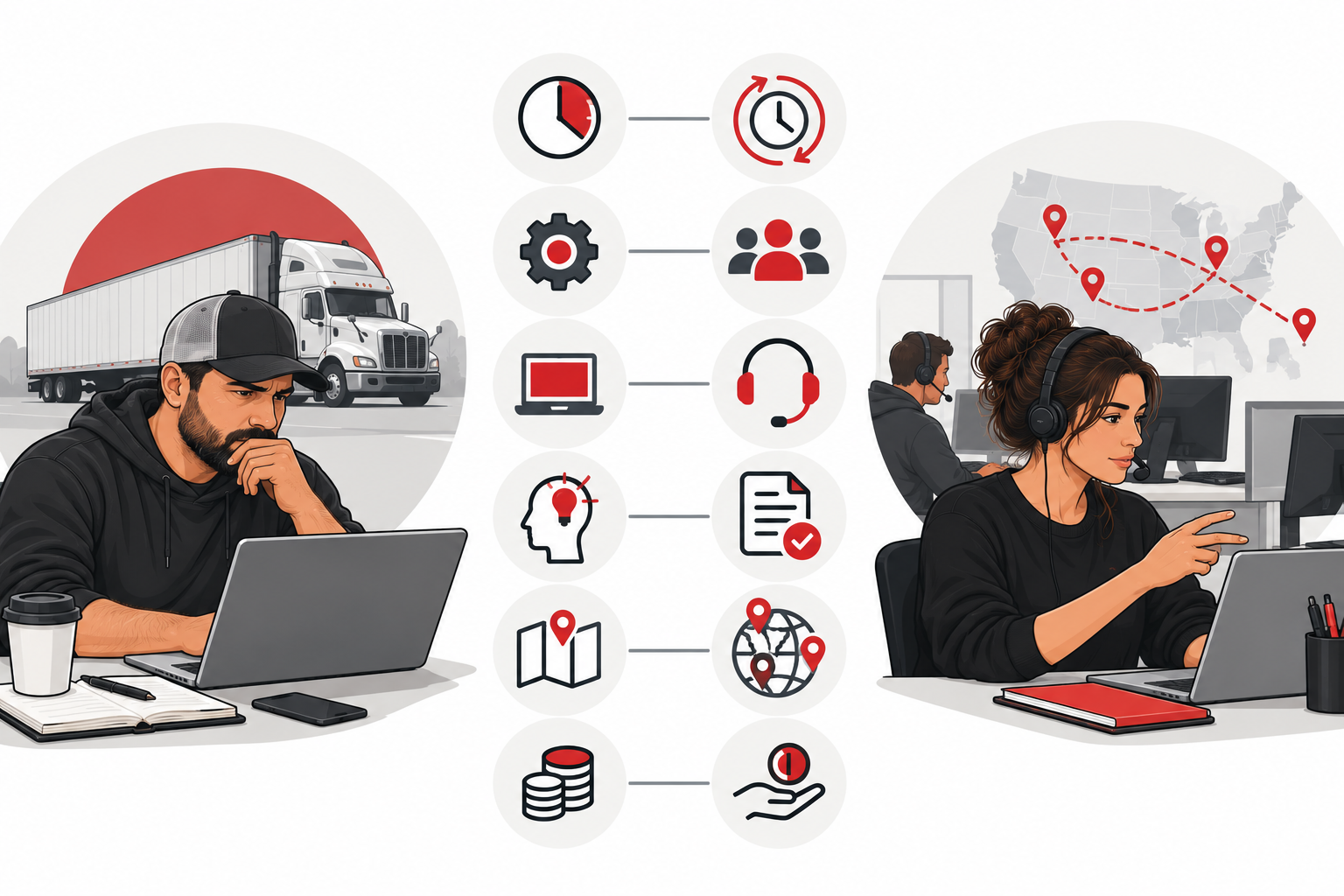
Time is usually the key tradeoff
An owner-operator may be able to negotiate well and still dislike spending off-duty time searching for freight, collecting documents, or solving broker setup issues.
Another owner may prefer direct market visibility and be willing to do the work.
Estimate the weekly time spent on:
- search;
- calls;
- paperwork;
- status updates;
- broker setup;
- invoicing support;
- exception management.
Then compare that time with the dispatch-service fee and the quality of the service offered.
Compare decision control
Before hiring a dispatcher, decide:
- Can the dispatcher book without approval?
- What rate or lane limits apply?
- Which destinations are excluded?
- Who approves changed terms?
- Who signs documents?
- Who receives payment?
- Who handles claims or safety issues?
A good dispatch relationship reduces ambiguity rather than creating it.
Compare tools and access
The carrier should control or properly provision access to systems.
For example, DAT describes a model where a carrier with authority can add a seat for a dispatcher partner.
Avoid casually sharing master passwords or identity credentials. When the relationship ends, revoke access and transfer records.
Compare service fees correctly
Do not compare a dispatch fee with carrier gross revenue.
A percentage fee, flat fee, or per-load fee buys a defined service. Evaluate:
- scope;
- coverage hours;
- truck count;
- after-hours support;
- document work;
- setup work;
- reporting;
- backup.
The cheapest percentage can be expensive if the service is unreliable. A higher fee is not automatically justified either.
Run a controlled trial
If using a service, start with clear expectations and a review period.
Measure:
- load recommendations that fit constraints;
- update quality;
- document completeness;
- unresolved exceptions;
- response times;
- carrier time saved;
- fee accuracy.
Do not judge the relationship only by one week's gross revenue.
Compare quality, not only cost
If an owner-operator is evaluating a dispatch service, ask for evidence of the operating process rather than a promise of a higher weekly gross.
Useful questions include:
- How is a load approved?
- How are rejected loads documented?
- Who covers after hours?
- How are broker changes verified?
- Where are RCs and PODs stored?
- What happens if the dispatcher is unavailable?
- How is the invoice calculated?
- How can the carrier terminate access?
These questions help compare a low-cost service with a more structured service without assuming price alone determines quality.
Frequently asked questions
Is self-dispatching free?
There may be no external dispatch fee, but the owner still spends time and may pay for load boards, communication tools, and other operating resources.
Does a dispatch service guarantee better rates?
No. A service can bring process, market search, and negotiation support, but freight outcomes depend on many factors.
Can an owner learn to self-dispatch?
Yes, many operational skills can be learned and practiced. The owner should still use appropriate professional advice for legal, tax, safety, and compliance questions.
Choose based on the operating model
Read the dispatch service agreement checklist, load-search guide, and dispatcher pricing guide before deciding.
Sources and further reference
Worked scenarios, comparisons, and checklists in this article are educational examples or editorial recommendations. They are not promises of employment, rates, revenue, or profit.
