Truck Dispatcher Pricing: Percentage vs Flat Fee vs Per-Load Models
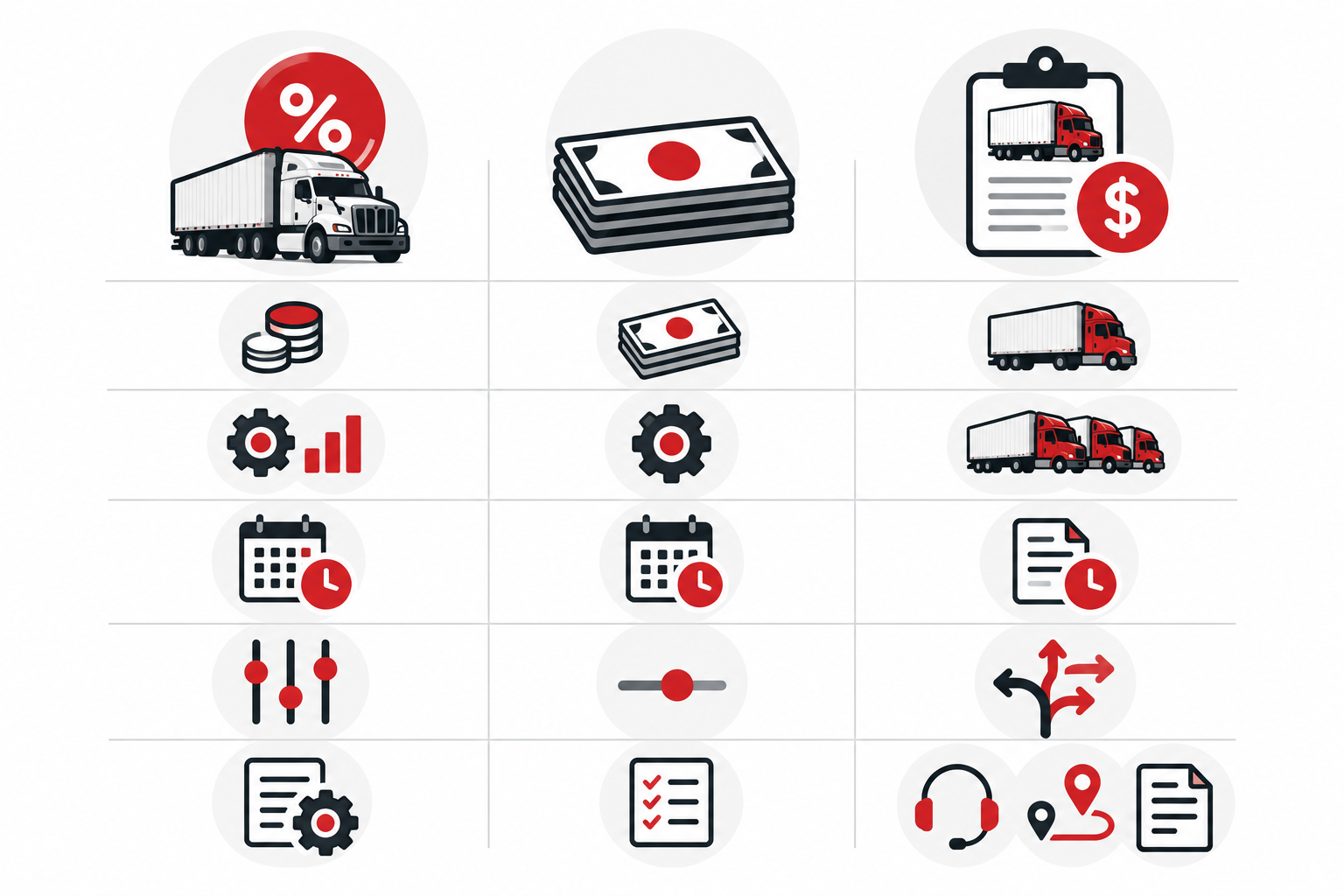
Truck dispatcher pricing can be structured as a percentage of an agreed revenue base, a recurring flat fee, a per-load fee, or a hybrid. The right model depends on service scope, workload, billing timing, client expectations, and the definitions written into the agreement. There is no universal “correct percentage.”

First define what the fee pays for
Pricing is meaningless without scope.
List the services included:
- load search;
- broker communication;
- negotiation;
- broker setup;
- driver dispatching;
- trip updates;
- document collection;
- weekly reporting;
- after-hours support;
- carrier onboarding;
- administrative work.
Then list exclusions.
A low fee for an undefined “full service” creates conflict quickly.
Percentage fee model
A percentage model can scale with the agreed fee base.
Example training calculation:
Carrier has $8,000 of freight revenue included in the agreement's fee base.
Dispatch fee = 5%.
$8,000 × 0.05 = $400 dispatch-service revenue.
That does not mean the dispatcher earned $8,000. It also does not mean the $400 is business profit after expenses and taxes.
The agreement should define exactly what “gross” or “revenue” includes.
Flat recurring fee
A dispatch service may charge a fixed weekly or monthly amount per truck or account.
Advantages can include:
- predictable invoice amount;
- easier budgeting;
- less debate about the fee base.
Risks can include:
- workload changing without price adjustment;
- unclear treatment of inactive trucks;
- after-hours work exceeding the original scope.
Define what activity level the flat fee assumes.
Per-load fee
A per-load model charges an agreed amount for each handled load.
This can be simple when the service scope is narrow.
Questions to define:
- When is the fee earned?
- What happens if the load cancels?
- Does TONU count?
- Are multi-stop loads priced differently?
- Are setup and document tasks included?
A “per load” number without these rules can still create disputes.
Hybrid pricing
A hybrid can combine:
- base retainer + percentage;
- flat fee + per-load fee;
- standard coverage + separate after-hours charges;
- onboarding fee + recurring service.
Complex pricing only helps if the client can understand and audit the invoice.
Define the fee base precisely
If using a percentage, answer:
- linehaul only?
- fuel surcharge?
- detention?
- layover?
- TONU?
- stop pay?
- other accessorials?
- amounts billed or amounts collected?
- refunds or adjustments?
A one-word term such as “gross” is usually not enough.
Do not set price from income goals alone
Historical videos may say a dispatcher can make $10,000 or $20,000 per month. Those numbers should not be used as pricing evidence.
Build price from:
- service scope;
- workload;
- coverage;
- software and admin cost;
- acquisition cost;
- risk and support;
- market feedback;
- sustainable owner hours.
Then test a downside case.
Compare pricing using workload
Suppose Client A has one predictable dry-van truck with normal weekday coverage.
Client B has three trucks, frequent after-hours problems, broker setup work, weekly custom reporting, and high exception volume.
The same percentage may not represent the same workload.
Pricing should not encourage the service to accept more responsibility than it can reliably deliver.
Billing and collection rules matter
The agreement should specify:
- invoice schedule;
- payment due date;
- payment method;
- supporting statement;
- dispute process;
- late-payment terms if applicable;
- termination and final invoice process.
Keep carrier transportation money separate from dispatch-service billing unless the business arrangement has been professionally reviewed for the exact activity.
Frequently asked questions
What percentage do truck dispatchers charge?
Market offers vary. There is no single official percentage. Compare current competitors carefully, but price your own service from scope and workload.
Is percentage pricing better than flat fee?
Not inherently. Percentage can scale with revenue; flat fees can be predictable. The better fit depends on the relationship.
Should I charge a setup fee?
That is a business decision. If onboarding creates substantial work, define what the fee covers and disclose it clearly.
Can I charge based on carrier profit?
Profit can be difficult to define consistently and may require access to expense data. Use a fee base both sides can understand and audit.
Put the pricing model into the agreement
Use the dispatch service agreement checklist, business-startup guide, and salary vs revenue guide before quoting a carrier.
Sources and further reference
Worked scenarios, comparisons, and checklists in this article are educational examples or editorial recommendations. They are not promises of employment, rates, revenue, or profit.
