Dry Van Dispatching: A Beginner’s Guide to Load Selection and Workflow
Dry van dispatching is the process of coordinating freight for enclosed, non-refrigerated trailers while checking equipment fit, pickup and delivery timing, deadhead, rate, broker information, and carrier preferences. The trailer type may be common, but the dispatcher still needs a disciplined pre-booking process.

Start with the actual truck and trailer profile
Do not search only for “van” and assume every result is suitable.
Record:
- trailer type and length;
- current truck location;
- earliest realistic pickup availability;
- driver-reported hours and constraints;
- carrier lane preferences;
- excluded commodities or facilities;
- weight or operational restrictions supplied by the carrier.
The load search should begin from this profile.
Reject hard mismatches before comparing rates
A dry-van load can have a strong posted rate and still be unusable.
Check:
- equipment requirement;
- commodity;
- weight;
- pickup appointment;
- delivery appointment;
- deadhead;
- route feasibility;
- carrier restrictions;
- broker identity;
- written terms.
If a critical field is missing, call and clarify before treating the load as an option.
Appointment math matters
Suppose the truck is 65 miles from pickup. A map estimate alone is not enough. The dispatcher must also consider:
- current truck status;
- driver availability;
- traffic and facility access;
- time zone;
- check-in requirements;
- whether pickup is appointment or FCFS.
A load that requires an unrealistic arrival should be rejected or re-negotiated rather than booked and “solved later.”
Compare loaded and all-in miles
Example training case:
- Load pay: $2,100
- Loaded miles: 700
- Deadhead: 70
- Total miles: 770
Loaded RPM = $2,100 ÷ 700 = $3.00
All-in RPM = $2,100 ÷ 770 ≈ $2.73
The numbers do not determine profitability by themselves because the carrier has its own costs. They make the comparison more consistent.
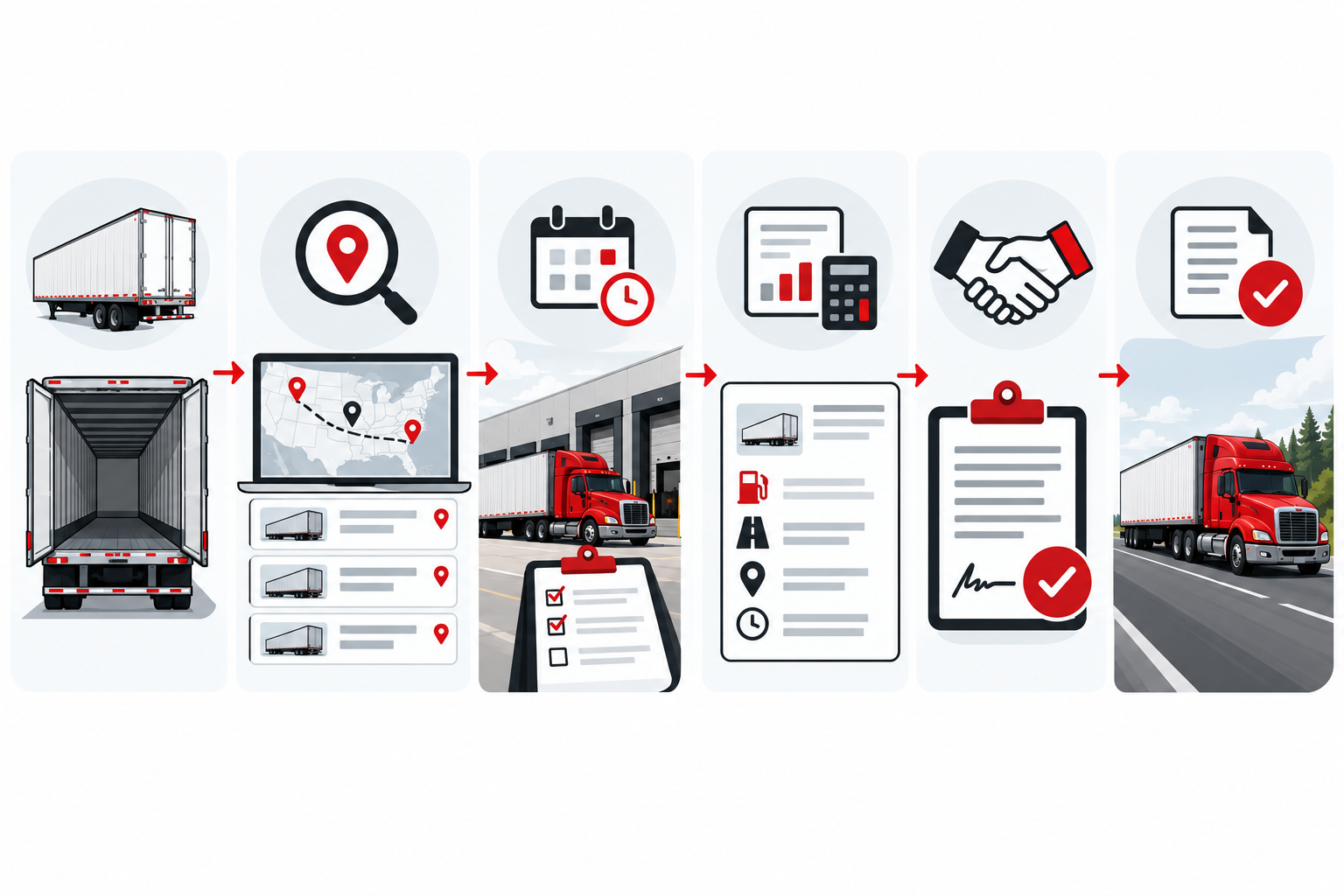
Ask for dry-van load details before negotiating
A broker call should confirm the operational facts first.
Questions can include:
- exact pickup and delivery;
- appointment type and times;
- commodity;
- weight;
- trailer requirement;
- load / unload method if relevant;
- number of stops;
- special instructions;
- current offered rate;
- accessorial terms that matter to the carrier.
Then negotiate from facts rather than a generic script.
Review the rate confirmation
Before acceptance, compare the RC with the call summary.
Check:
- carrier name;
- broker identity;
- origin and destination;
- appointment details;
- commodity / equipment;
- agreed rate;
- stop information;
- accessorial language;
- cancellation / TONU terms if present;
- special instructions.
Do not rely on an old RC version after terms change.
Dispatch the driver with a clean trip brief
The driver does not need every internal discussion.
Provide the confirmed operational information through the carrier's approved process:
- pickup;
- reference number;
- appointment;
- commodity / weight as appropriate;
- delivery;
- contact or facility instructions;
- special shipment instructions;
- next update expectation.
If the driver identifies a conflict, pause and resolve it.
Manage the trip, not only the booking
Dry-van dispatch continues after the RC.
Track:
- pickup check-in;
- loading delay;
- BOL;
- in-transit status;
- delivery check-in;
- POD;
- unresolved accessorial support.
The closeout should leave billing or accounting with a usable document set.
Common beginner mistakes
Chasing posted rate
The highest rate is not necessarily the best load after deadhead, timing, and destination.
Ignoring the next market
A load can pay well and leave the truck in a weak or unwanted area.
Booking before confirming equipment details
“Dry van” still requires specific fit.
Treating HOS as a dispatcher's estimate
Use driver and carrier information. FMCSA rules establish legal limits, but the dispatcher's screen cannot tell you every real-time condition.
Build a weekly dry-van review
After several loads, review the carrier's own records. Compare booked all-in RPM, average deadhead, common rejection reasons, facility delays, missing documents, and destinations that repeatedly create weak reload options. This does not create a universal market benchmark; it helps the carrier and dispatcher improve their own decision process.
Frequently asked questions
Is dry van easier than reefer or flatbed?
It has fewer temperature and open-deck requirements, but the dispatch process still requires accurate timing, documents, economics, and communication.
Do dry vans use different load boards?
Major load boards commonly support van freight. The carrier's plan and access rules determine available features.
What should a beginner practice first?
Create one dry-van truck profile and compare three fictional loads using the same checklist.
Build the equipment-specific habit
Use the broader dry van vs reefer vs flatbed guide, then practice with the load-search, RPM, and rate-confirmation checklists.
Sources and further reference
Worked scenarios, comparisons, and checklists in this article are educational examples or editorial recommendations. They are not promises of employment, rates, revenue, or profit.
